Cuba. Land of socialism, old cars, bright sun and tobacco, where everything changed in 1959. One of the first things that Fidel Castro did after the revolution was to elevate the importance of the arts. It’s not entirely clear why he did, but the Cuban arts scene continues to thrive despite other aspects of life in Cuba that do not.
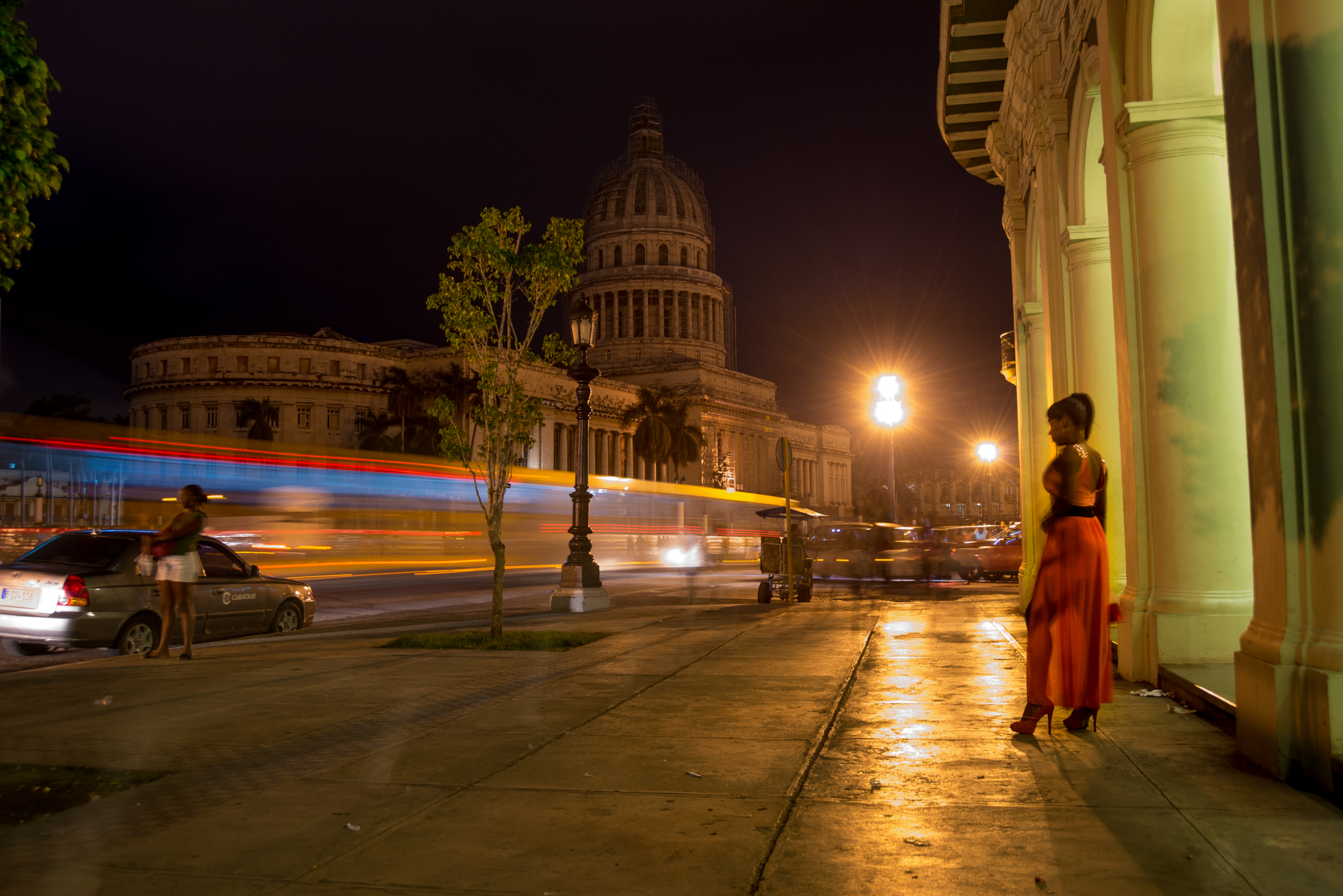
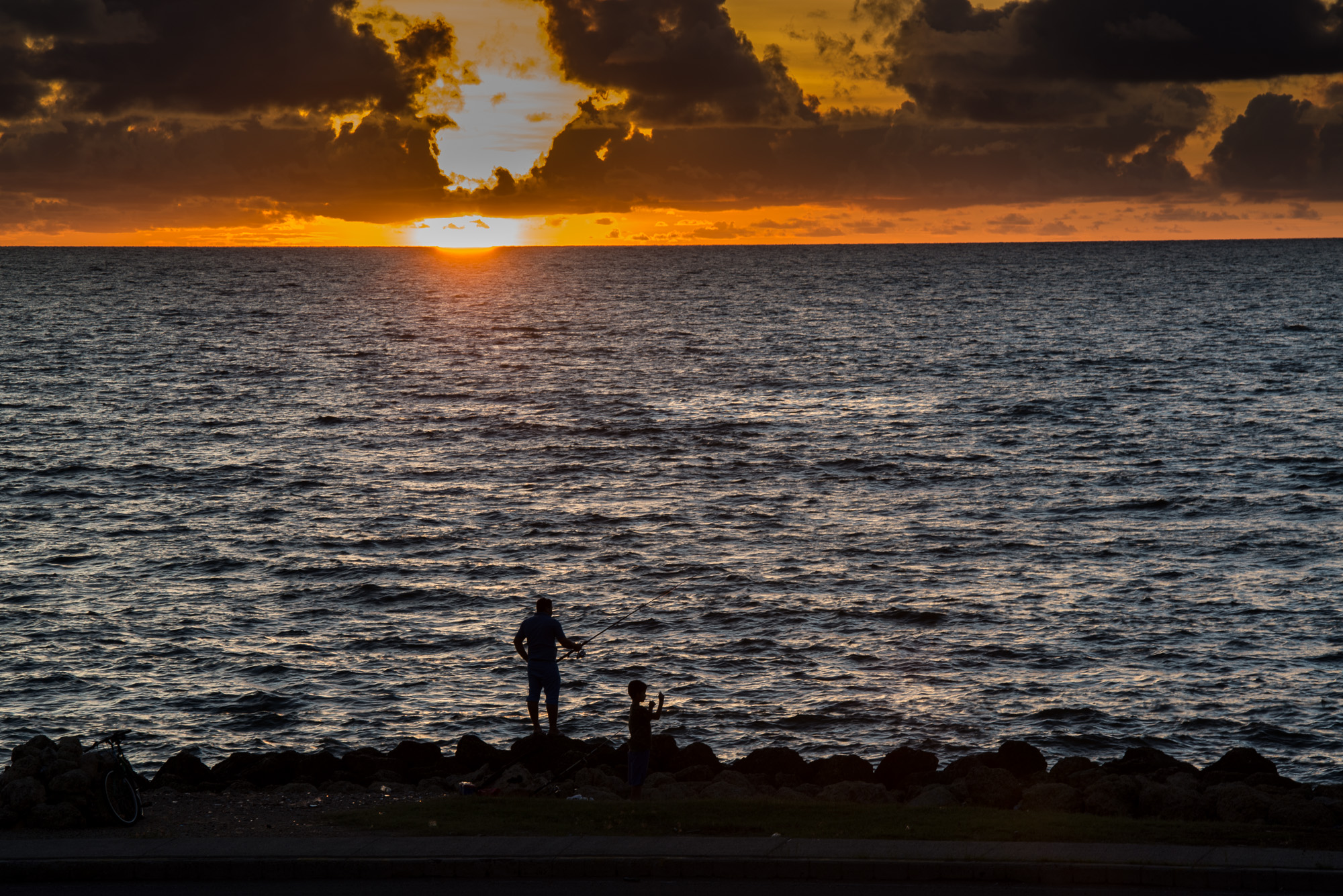
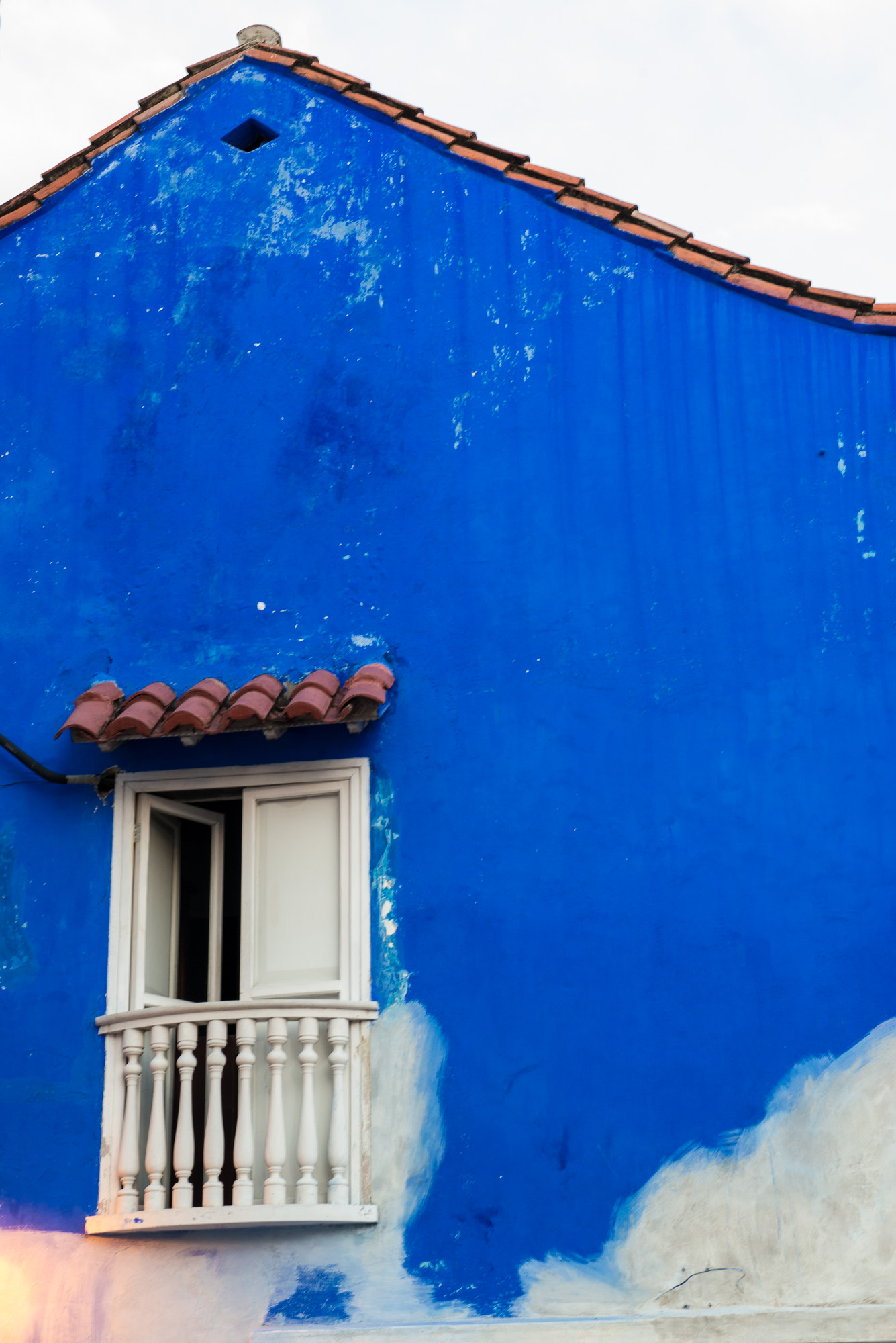
As you drive from the airport along the Malacon, the sea wall, that separates the city from the ocean, you see what looks like a magnificent city with ornate building of spanish colonial architecture in every color of the rainbow.  But as you get closer, your view is obscured by the haze, because first you have to get past the exhaust fumes. Just ninety miles from Florida, 45 minute plane ride, and you have to get past the fumes.
  Cuba is a land of amazing sights, sounds, philosophies, problems and possibilities. We have spent the last nine days experiencing it all but due to the nearly non-existent internet service have not been able to write until now that we have made it home to the US.
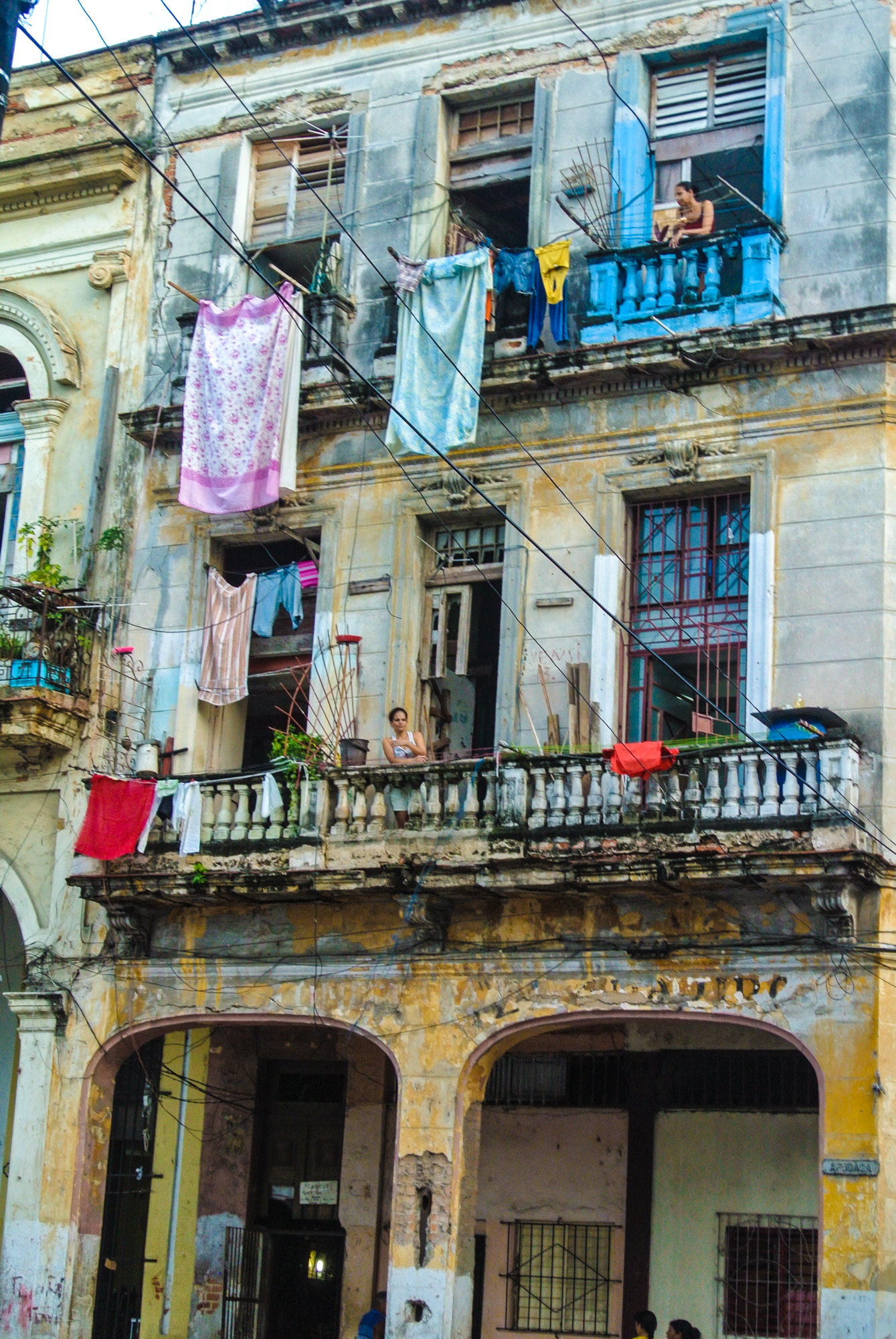
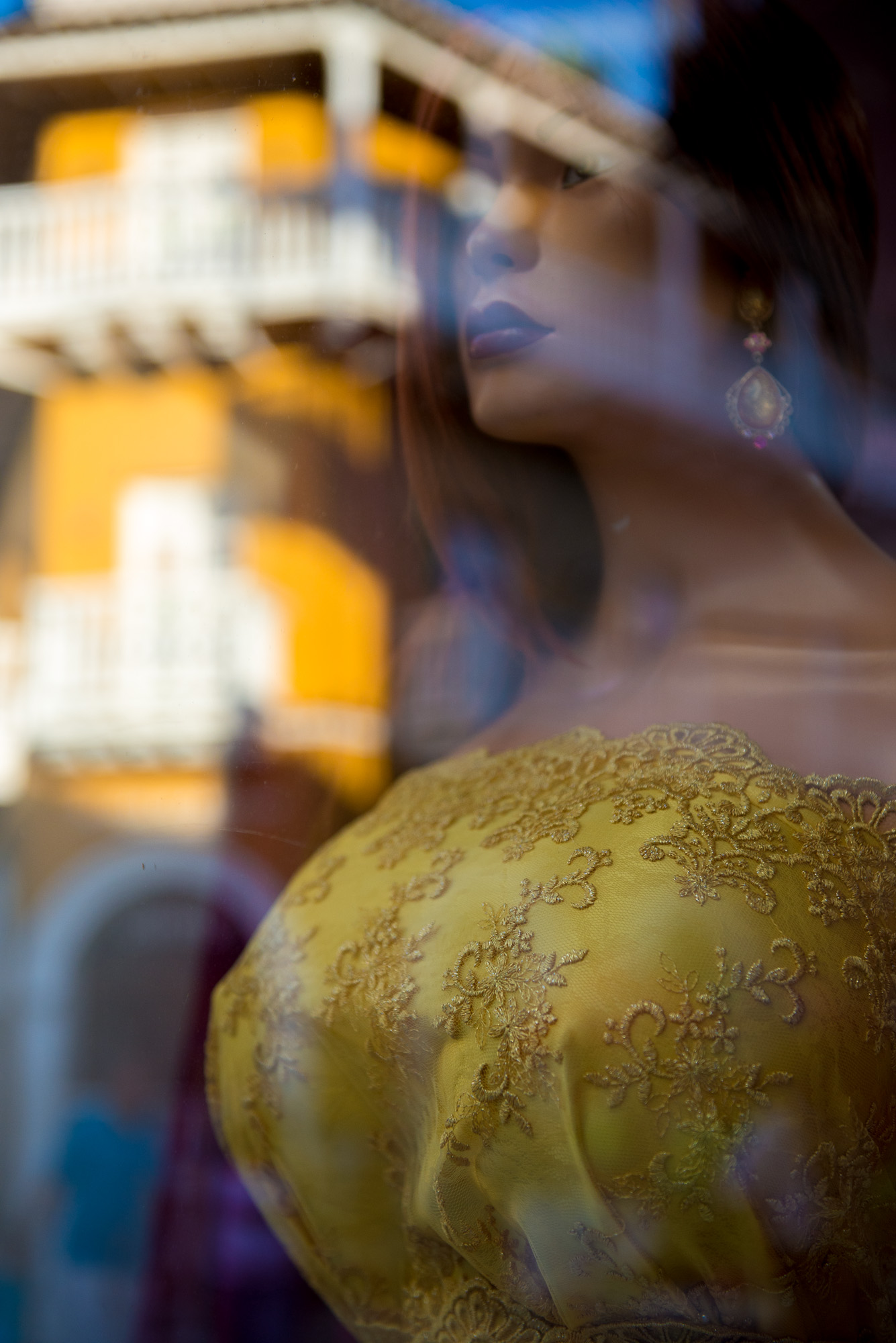
 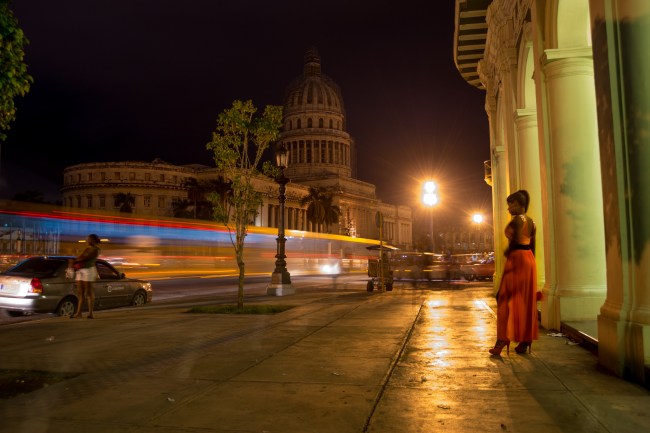 La Habana, at once architecturally magnificent and sadly crumbling, is a city of over 5 million struggling to find its identity in a changing world and a changing country. We were there as photographers and spent our time trying to capture what amounts to an indescribable land and its people.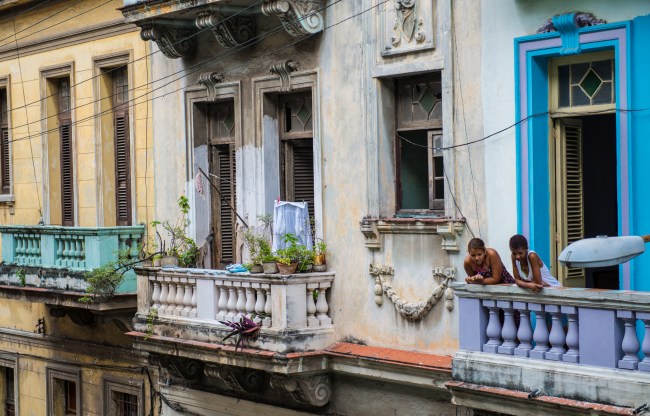
 To understand today, you must have a quick look at yesterday. Fidel Castro, architect of La Revolucion, took over the country in 1959 and over several short years nationalized much of the country and endeavored to share the country’s wealth among the people providing free education, healthcare and other services to a largely uneducated population.
 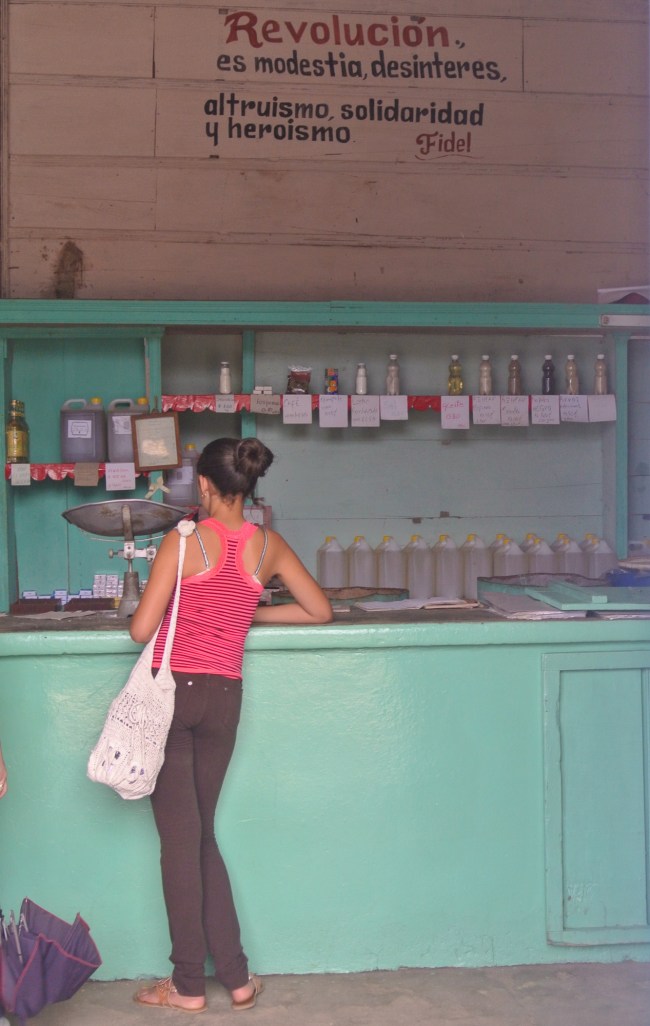 Castro did not count on the wealthy Cubans fleeing with their money and skills to the US, and he surely didn’t count on the US trying, and failing, multiple times to remove him from power. So with a substantial portion of the country’s upper class gone and the US creating an embargo and trade blockade in 1962 (which lasts to this day), enter the USSR to provide aid and trade. So Cuba made it through the 60s and 70s and even most of the 80s with their friends the soviets calling the shots. The country was not an economic success per se, but it limped along with the support of the hammer and sickle.
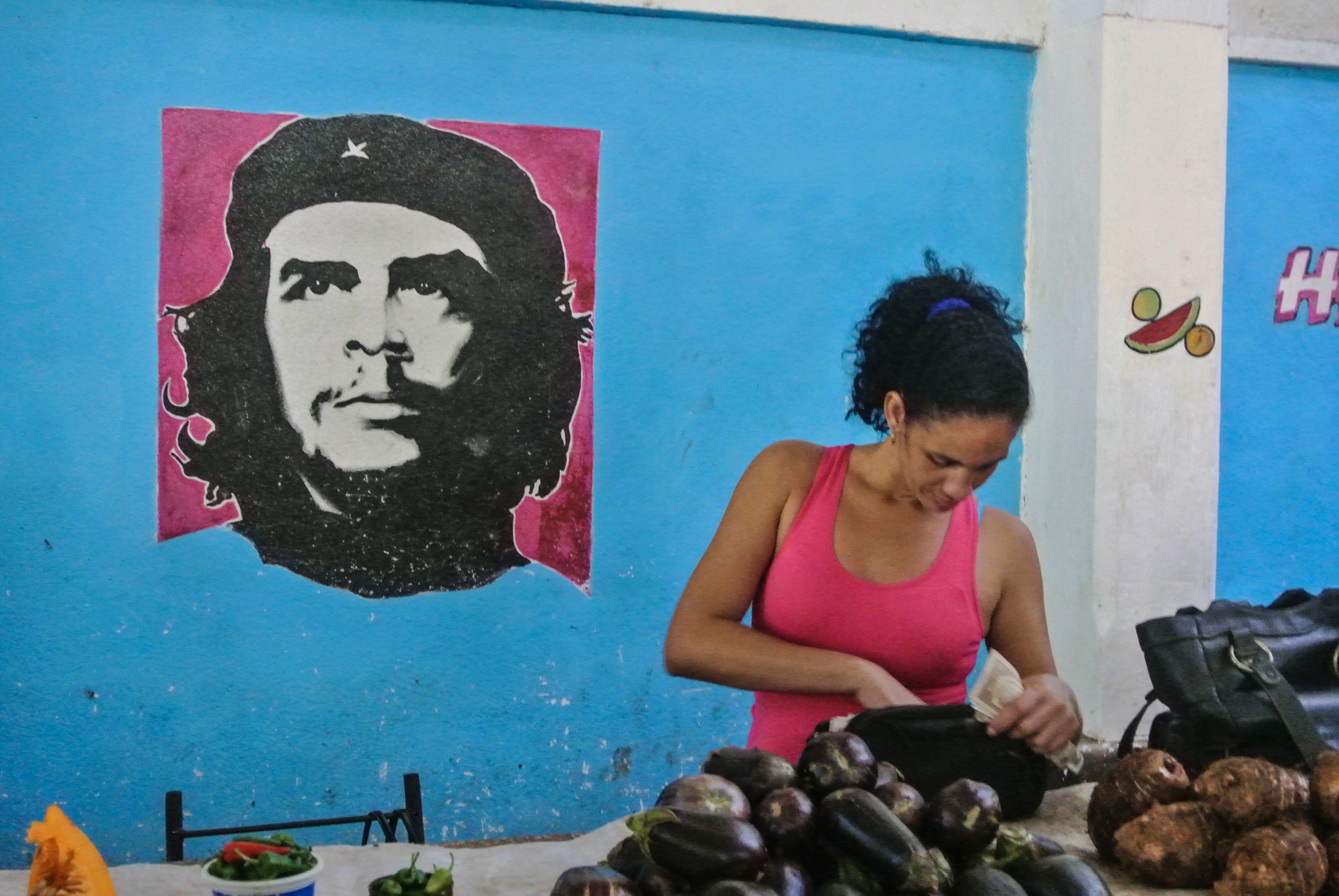
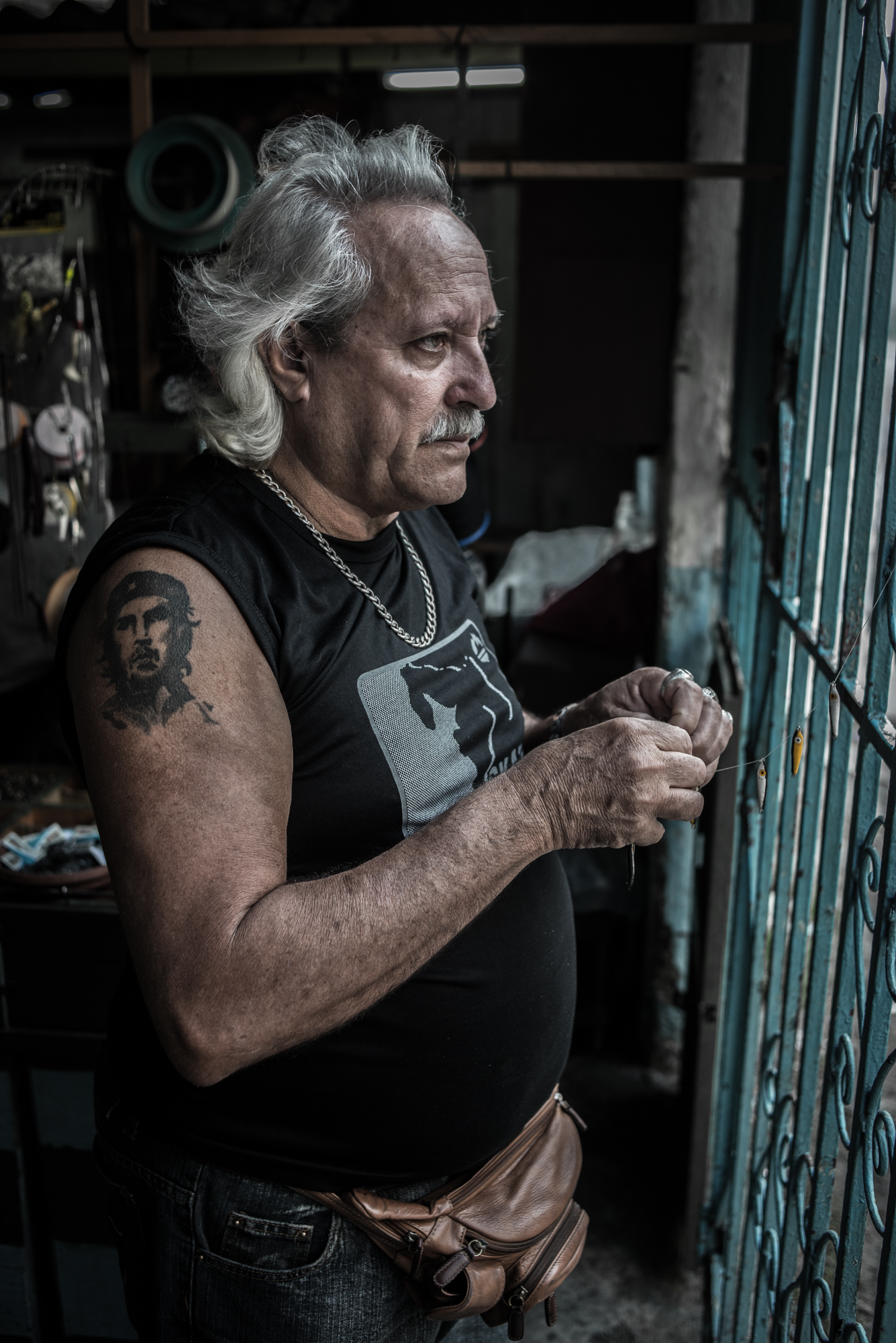
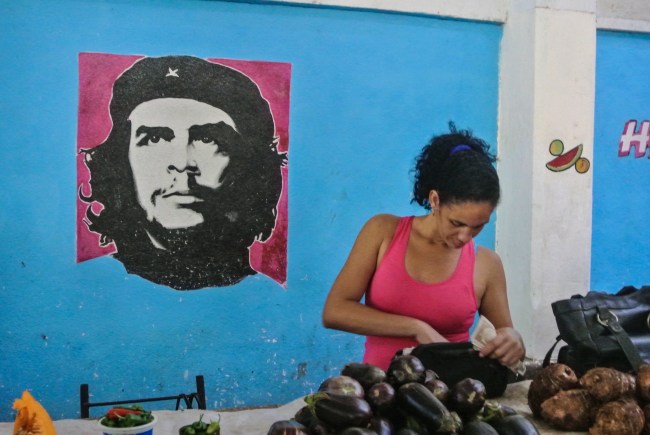 Interestingly, Castro is not the face of the revolution. That honor goes to Ernesto “Che” Guevara, an Argentine revolutionary who played a prominent role in the Cuban revolution and died a hero. Che’s likeness has turned into a logo, an icon, and is everywhere you look throughout the Cuban landscape.
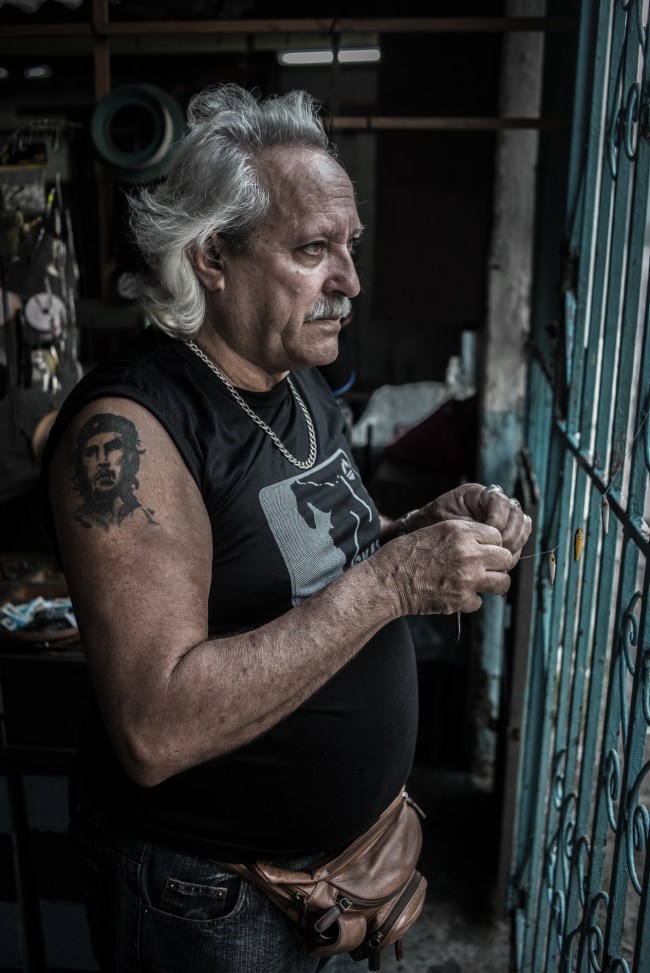
When the Soviet Union disappeared one day in 1994, so did 70% of the Cuban GDP. Cuba was suddenly without a benefactor, without exports, and without money. Moreover, the Cuban people were not equipped to do anything about it and the Cuban government wasn’t either. Cuba fell into a deep recession and, as Cubans told us this week, it wasn’t a matter of what you were going to eat today, but if. (As a result, Cuban today love buffets!)
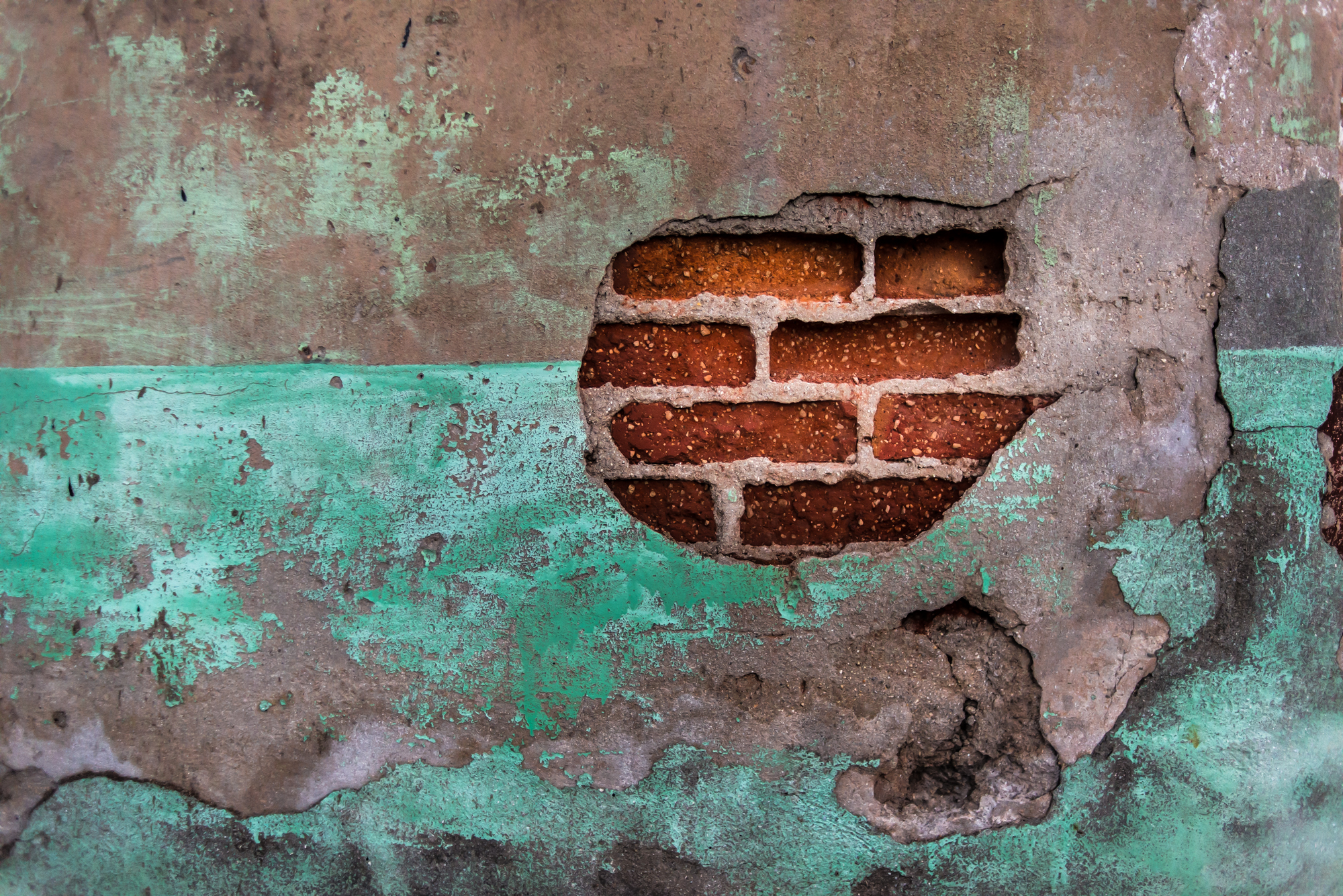
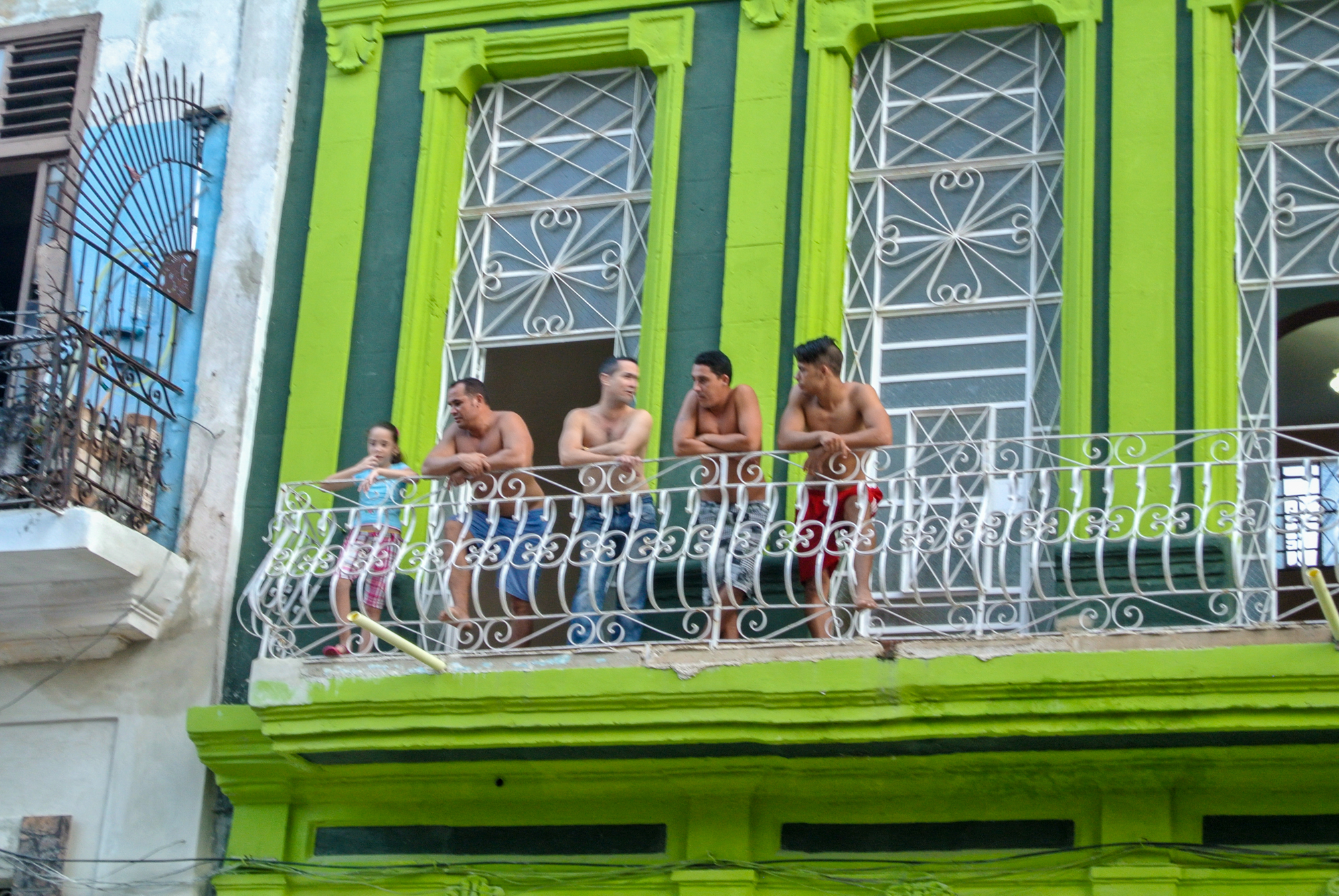
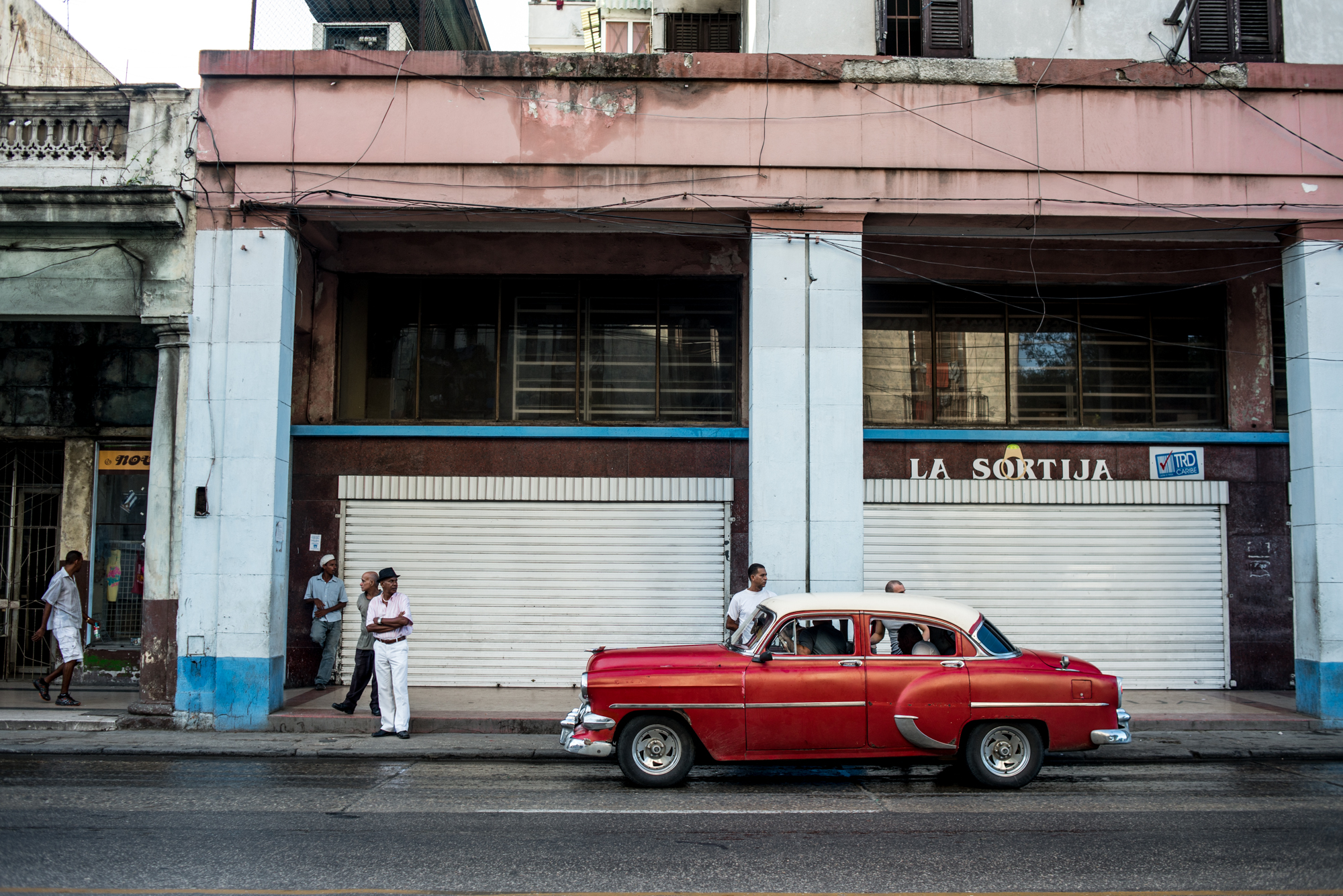
Today, this once vibrant city looks like a shadow of its former self with buildings stained by exhaust, crumbling from acid rain  and no maintenance,
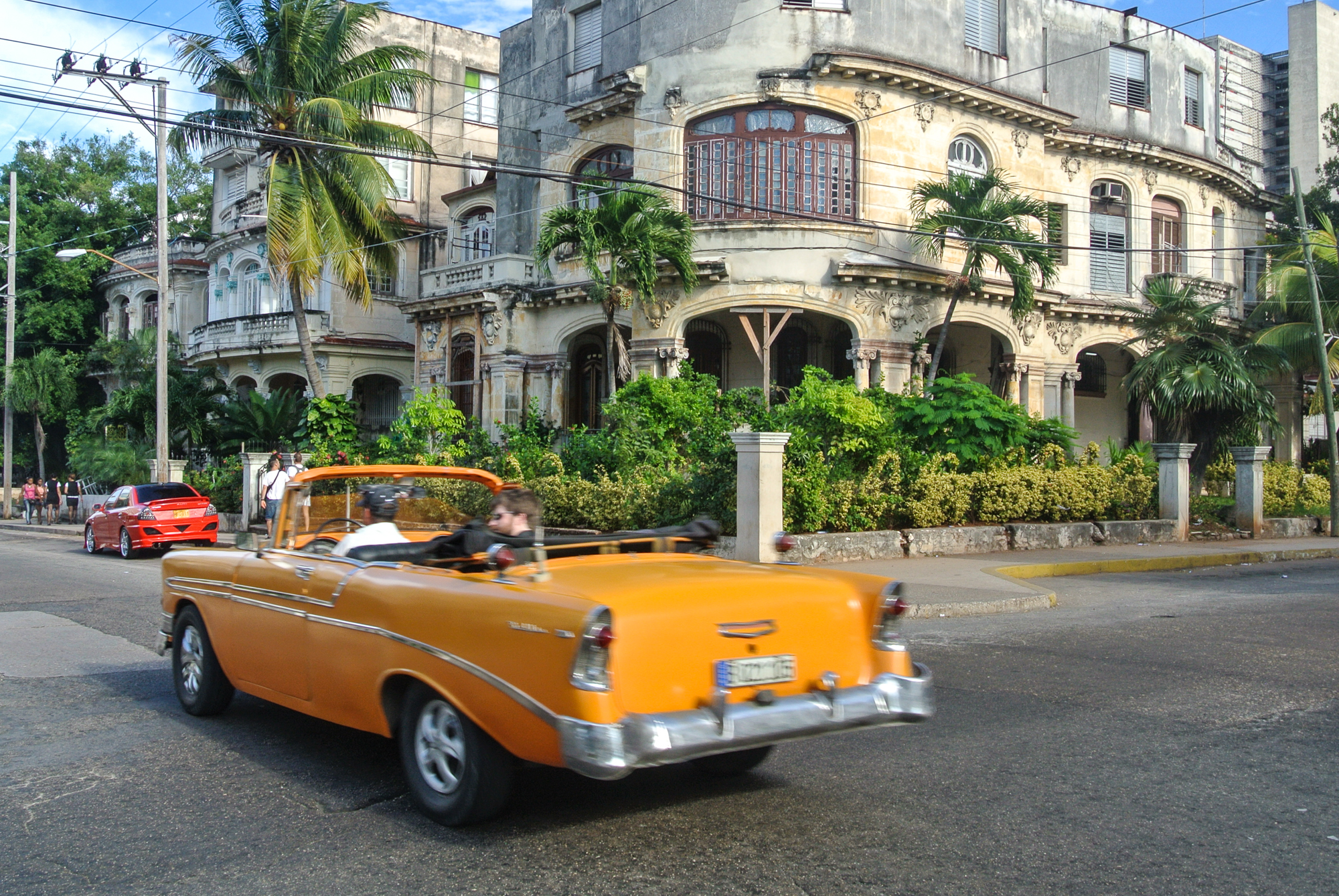
  and automobiles from the heydays of the 50’s still running, albeit with 1970’s era replacement engines.
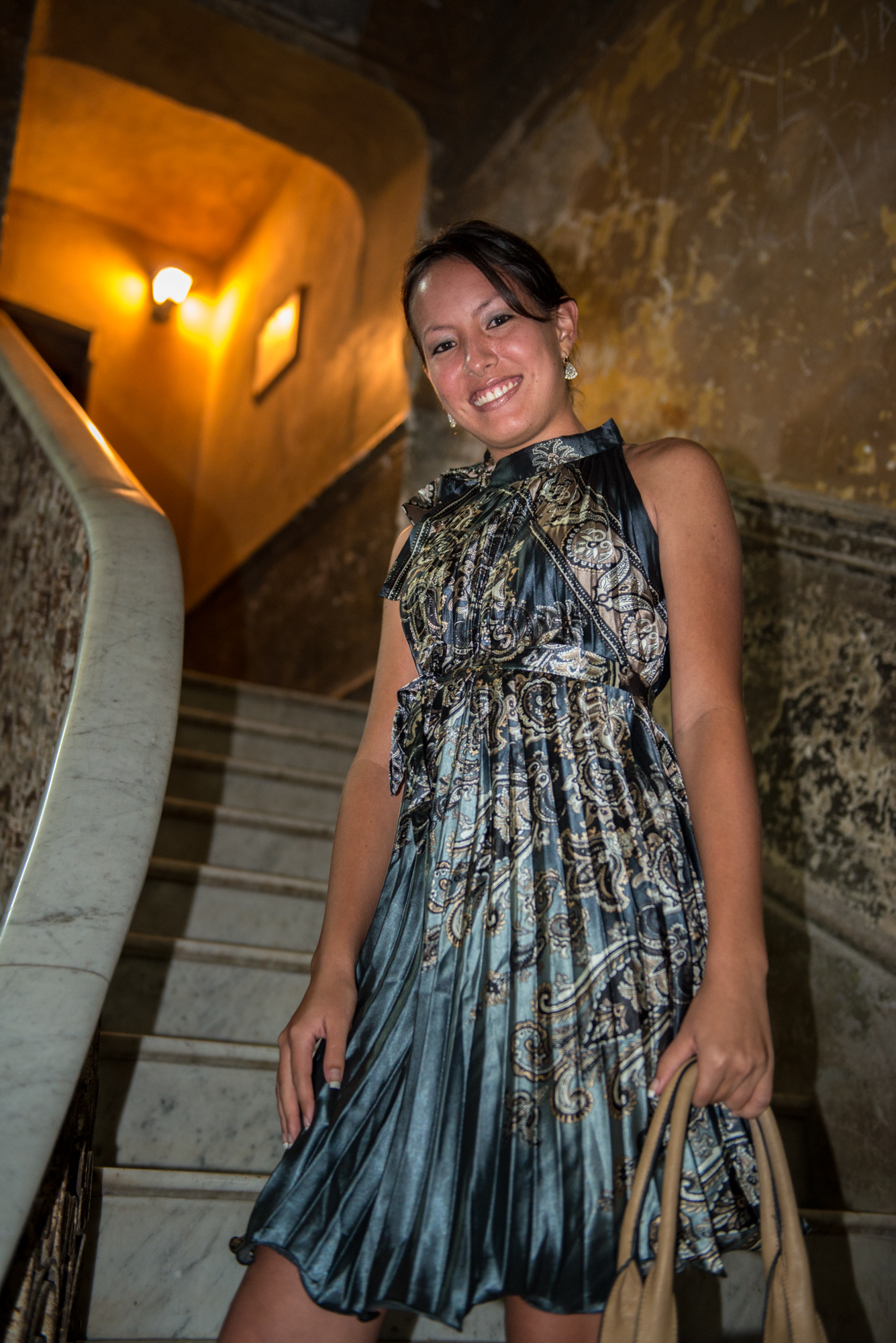
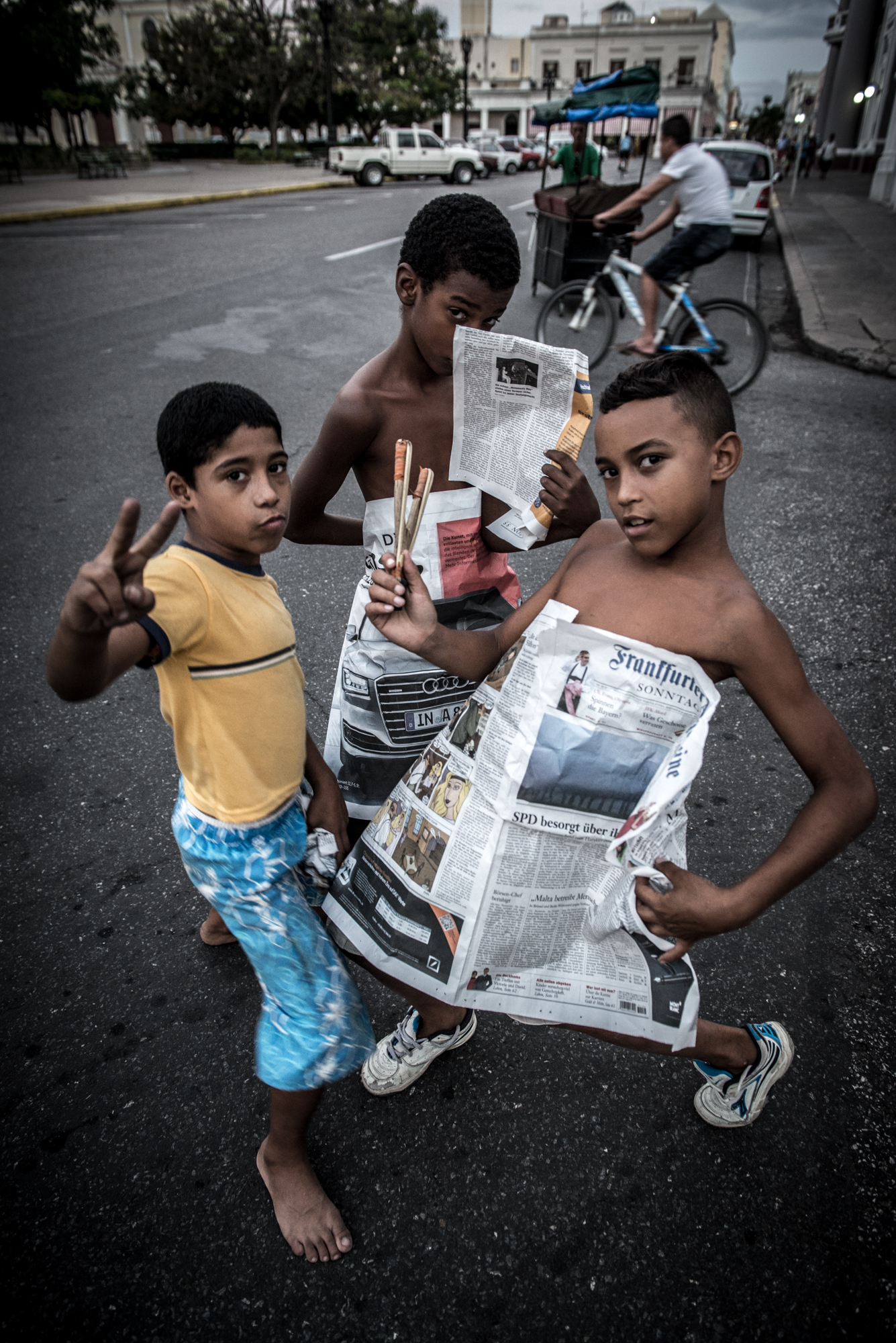
  But there’s a beauty here that is undeniable. The Cuban people are friendly and warm, they are healthy and basically educated, the young Cubans in their 20s and 30s are forward thinking, fashionable and very hopeful for the future of Cuba.

During the soviet years, nearly every business was owned by the government. Restaurants, markets, sugar plantations, you name it. And, as you can imagine, the government isn’t always very good at running all types of businesses. But in the last 10 years things have begun to change. One of the early, and most visible changes is the Paladar. A paladar is a privately owned restaurant which, initially, could have no more than 12 seats at tables in someone’s home.  They cook in their kitchen and serve Cubans and tourists in the living room and dining room. More recently the 12 seat limit has been lifted and paladars are now found all over Havana and serve some of the best food you can get.
One change that is quite visible is the public acceptance of the LGBT community. In fact, President Raul Castro (Fidel’s bother) has a daughter named Maria Castro who is the nation’s number one advocate for LGBT rights. You see openly gay men and women in any neighborhood, as well as the occasional transvestite along the main boulevards of the city.
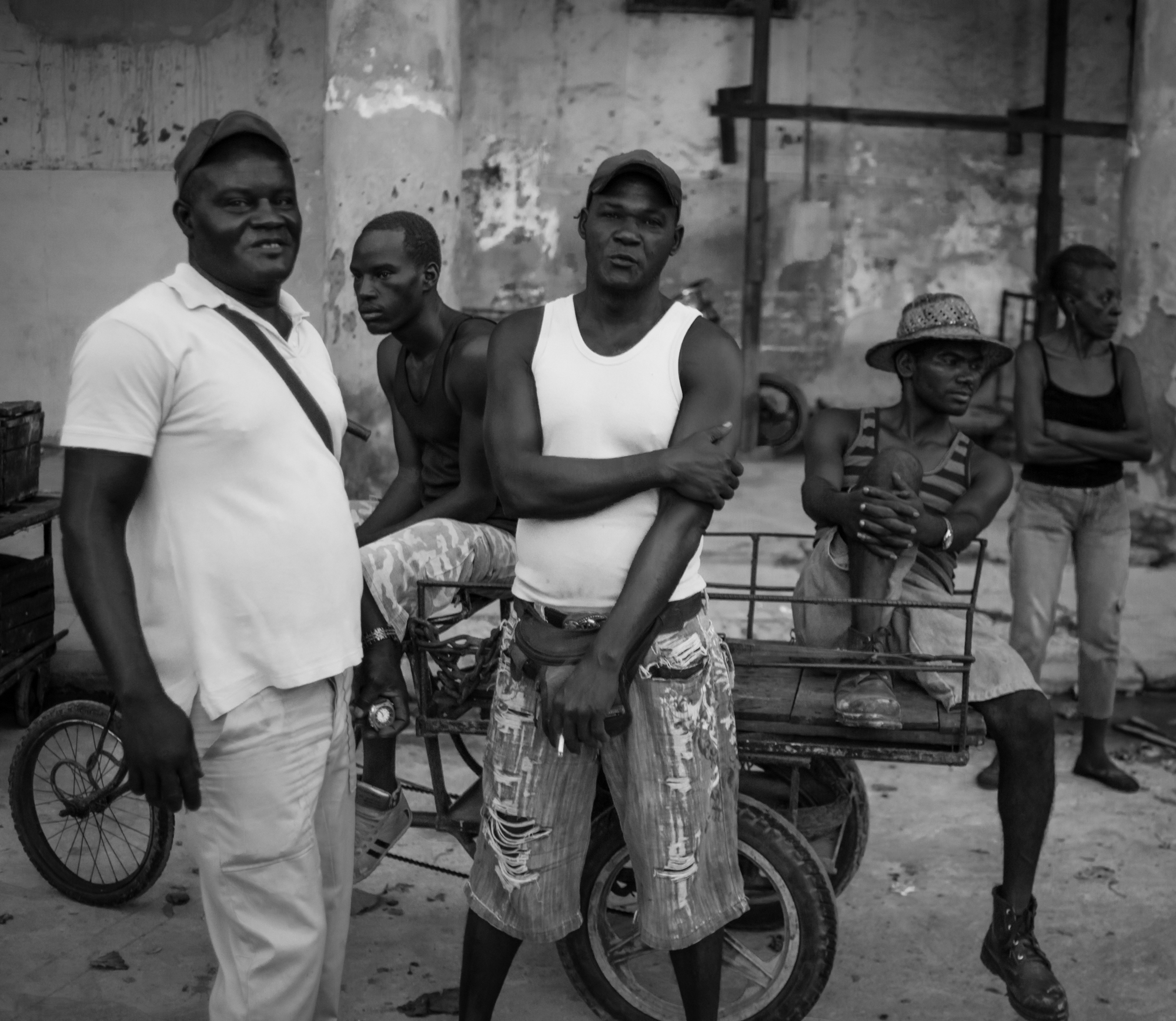
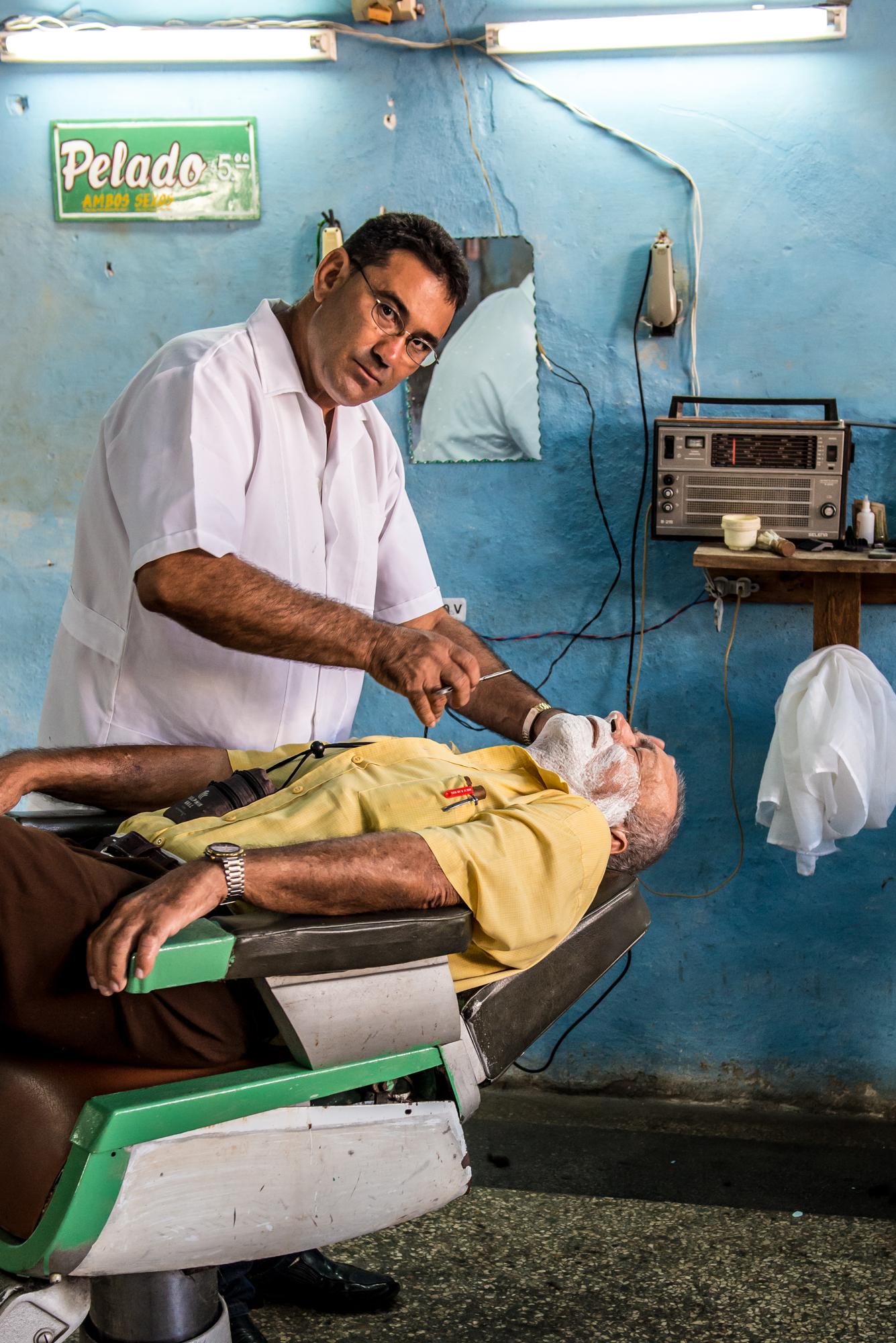
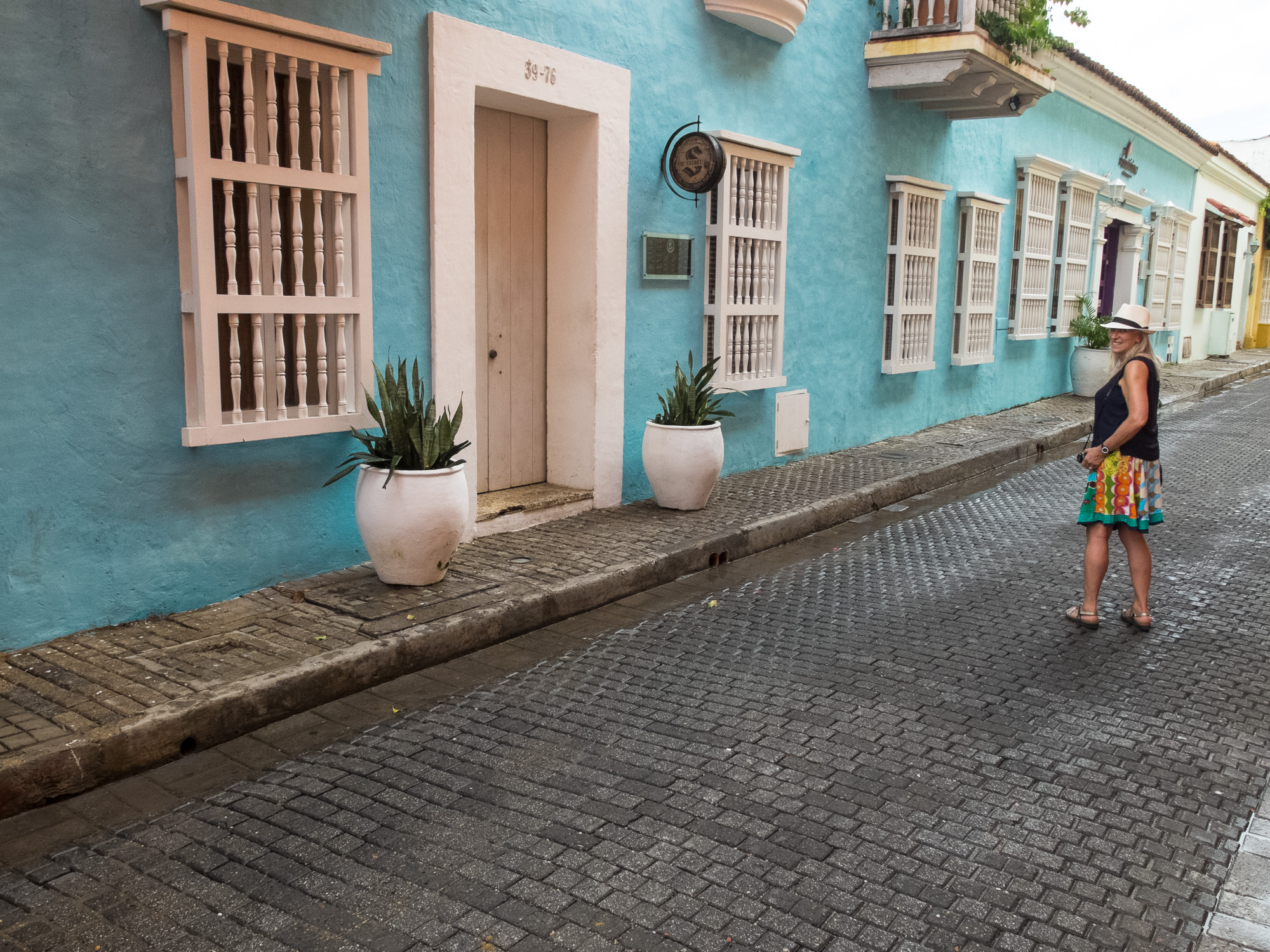
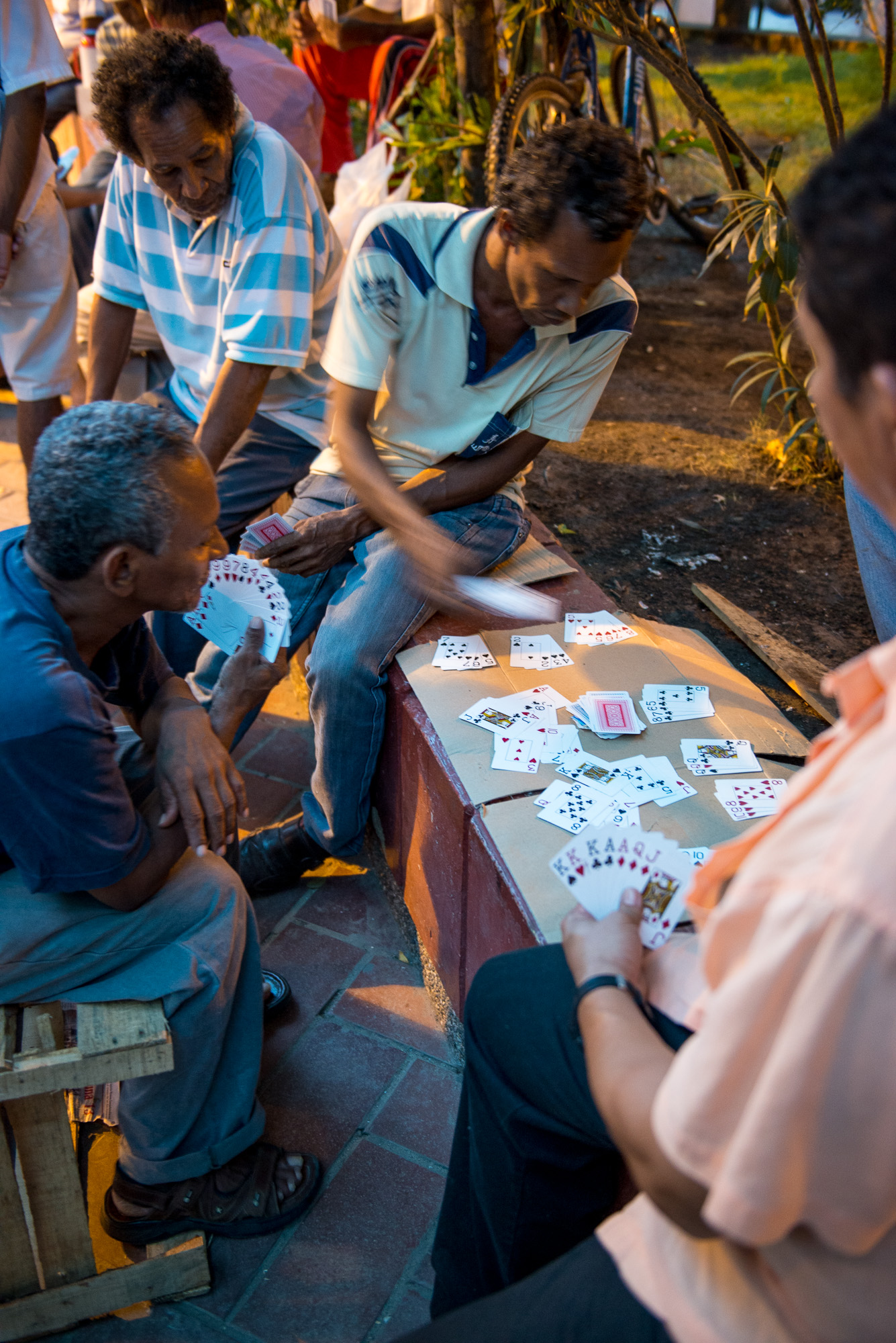
We walked the neighborhoods of Vieja Habana, old Havana, and met people going to the market to get the day’s produce, selling mineral water from their front door in their first attempt at entrepreneurship, and some of the most amazing auto mechanics that keep 55 year old cars running and looking good.
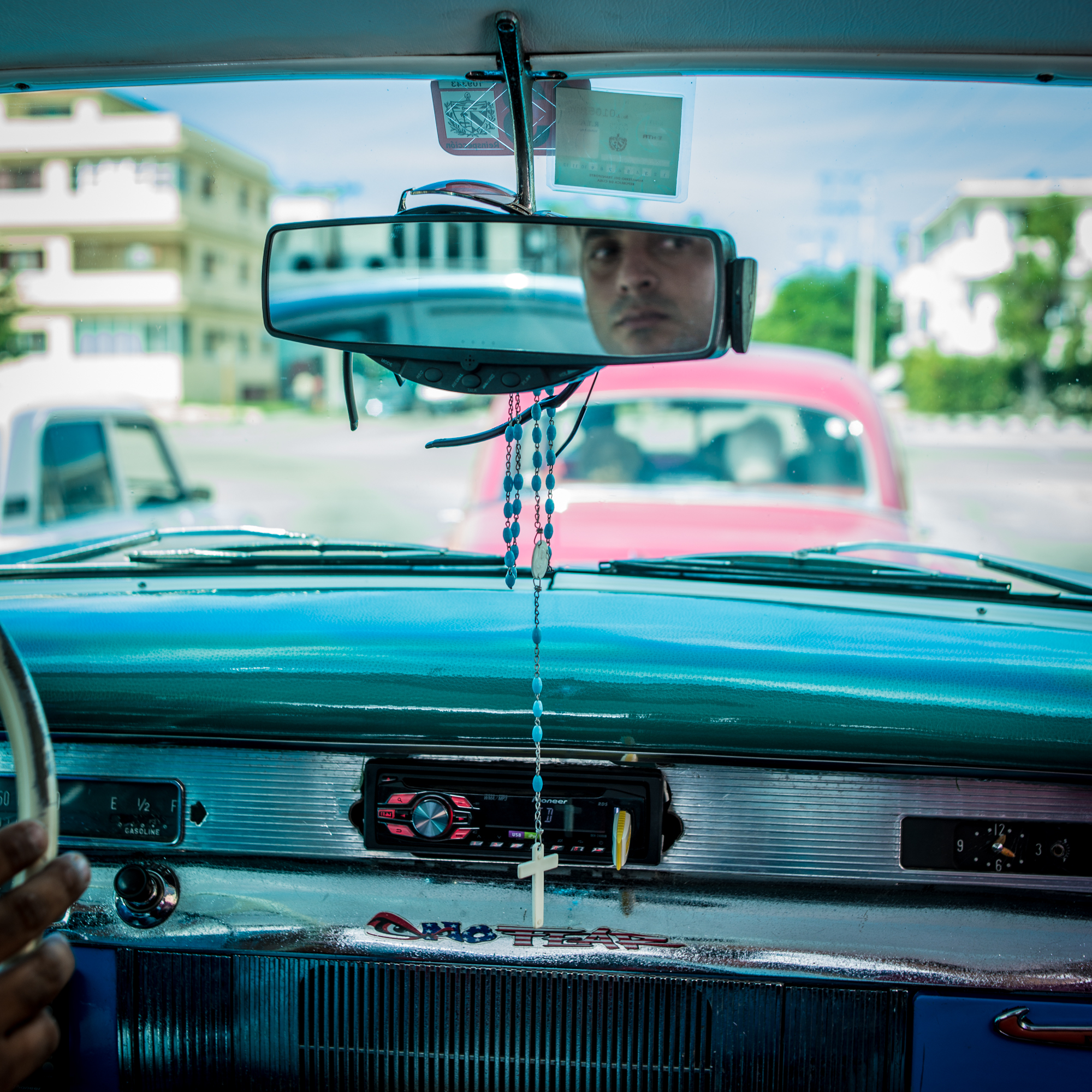
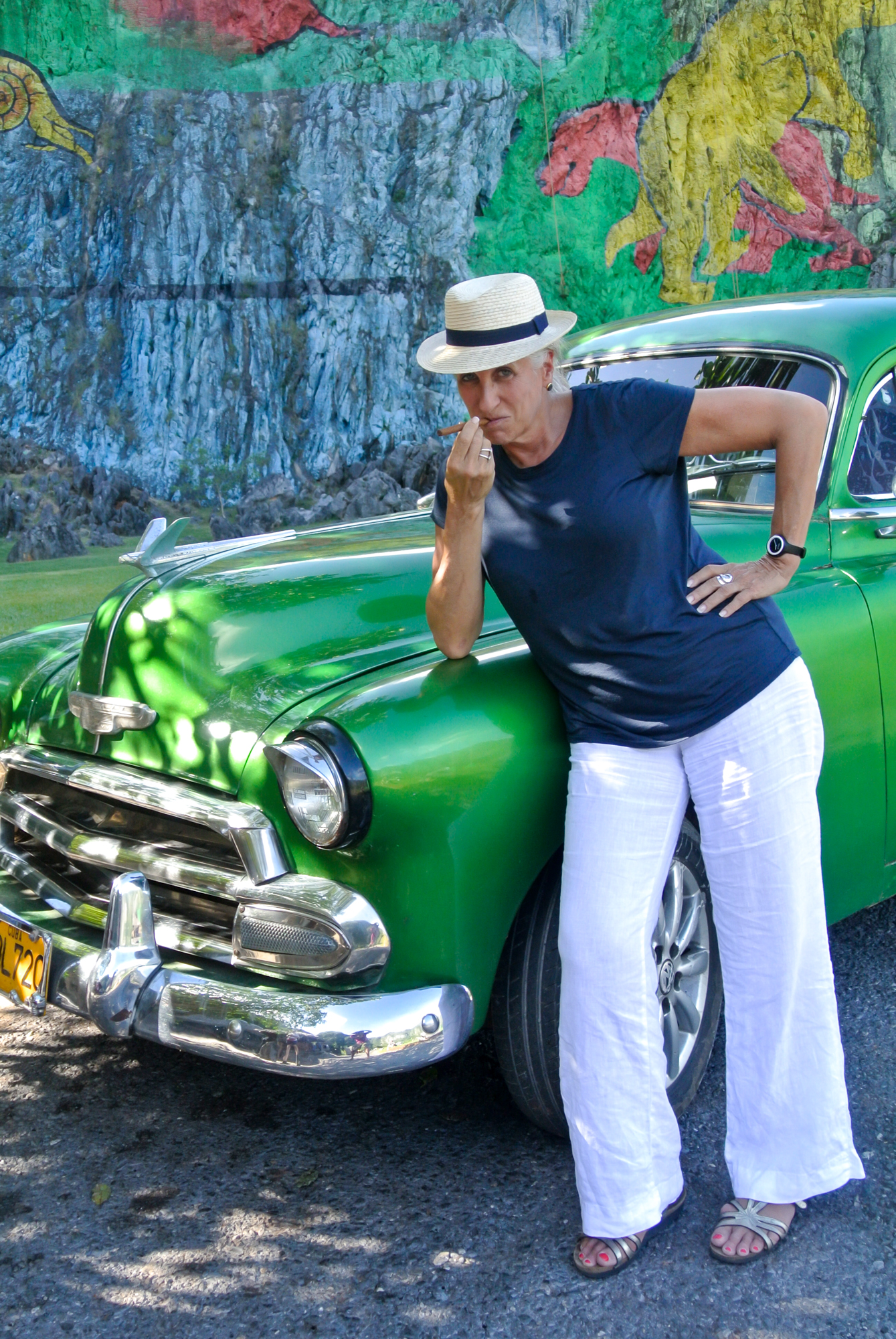
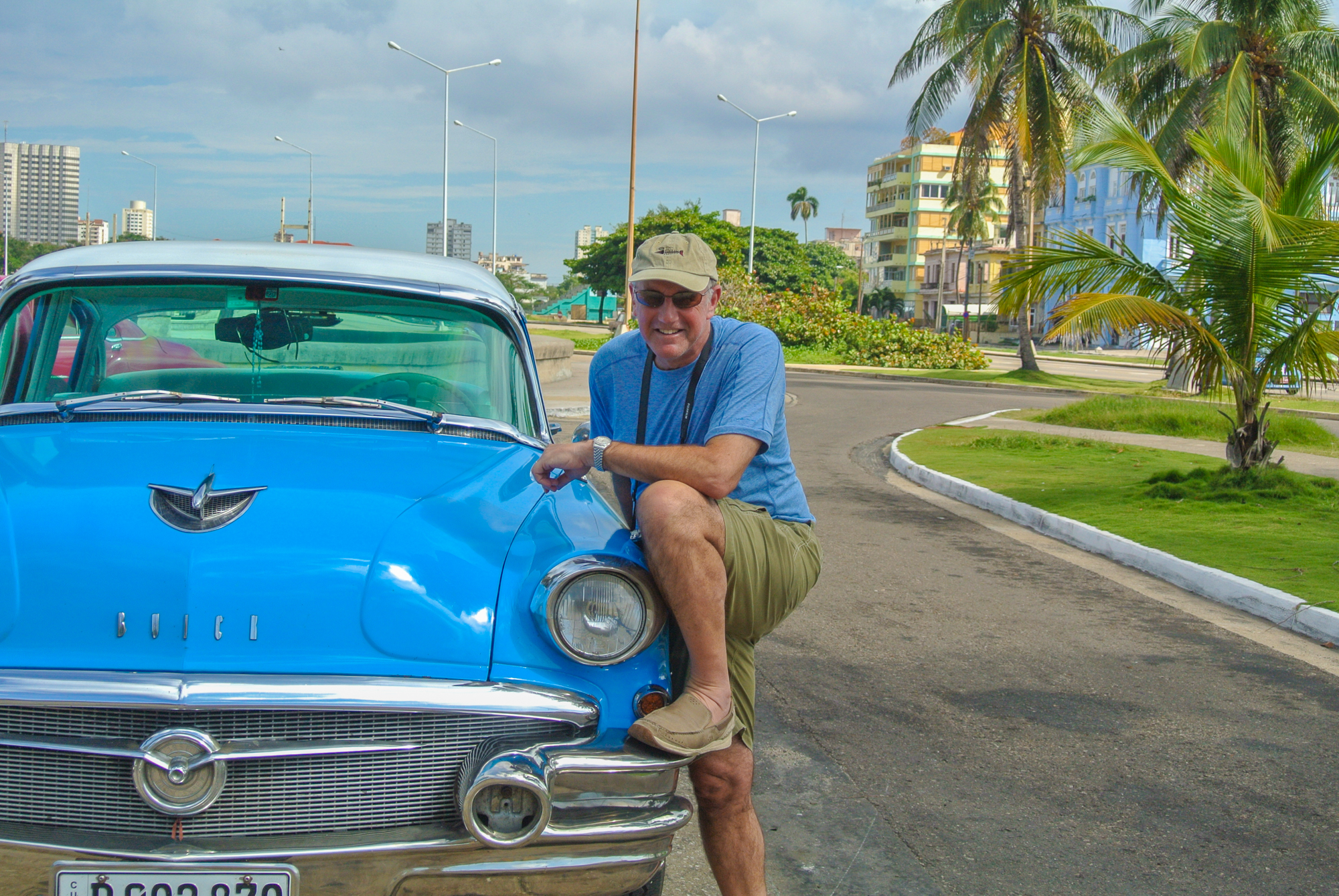
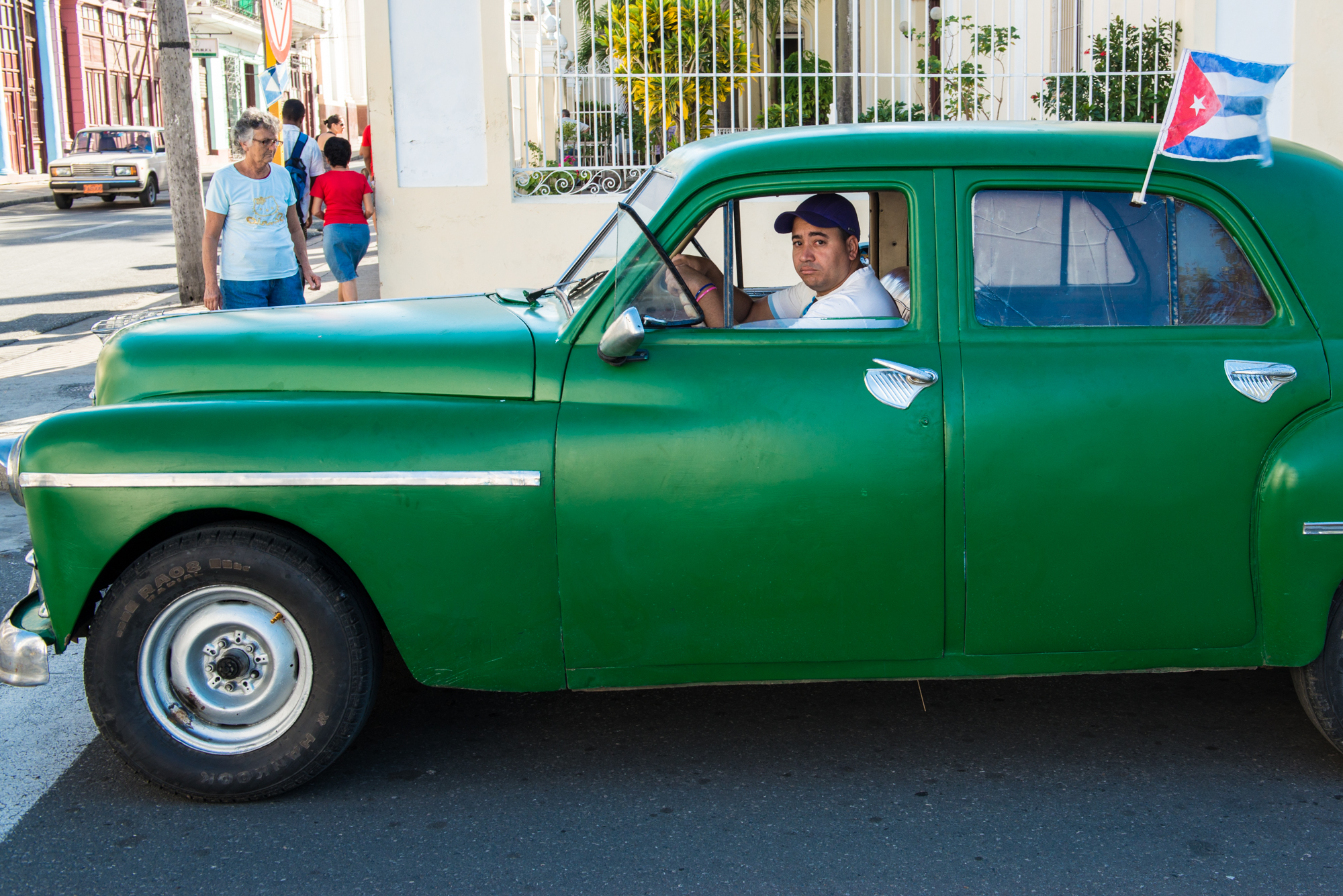
 So…the cars. Frozen in time, the streets of Havana are chock a block with Chevy Bel Airs, Ford Fairlanes, Cadillacs, Ramblers, you name it. Each car that has been restored is painted a bright beautiful color and shines like a mirror.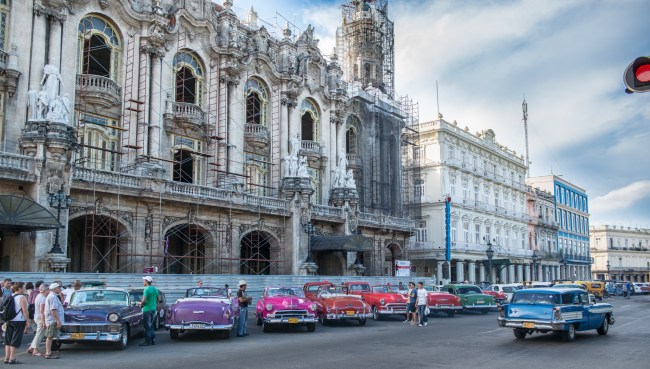

 Others have not been restored but still evoke a sentiment in you that makes you long for the great days of these beautiful cars.

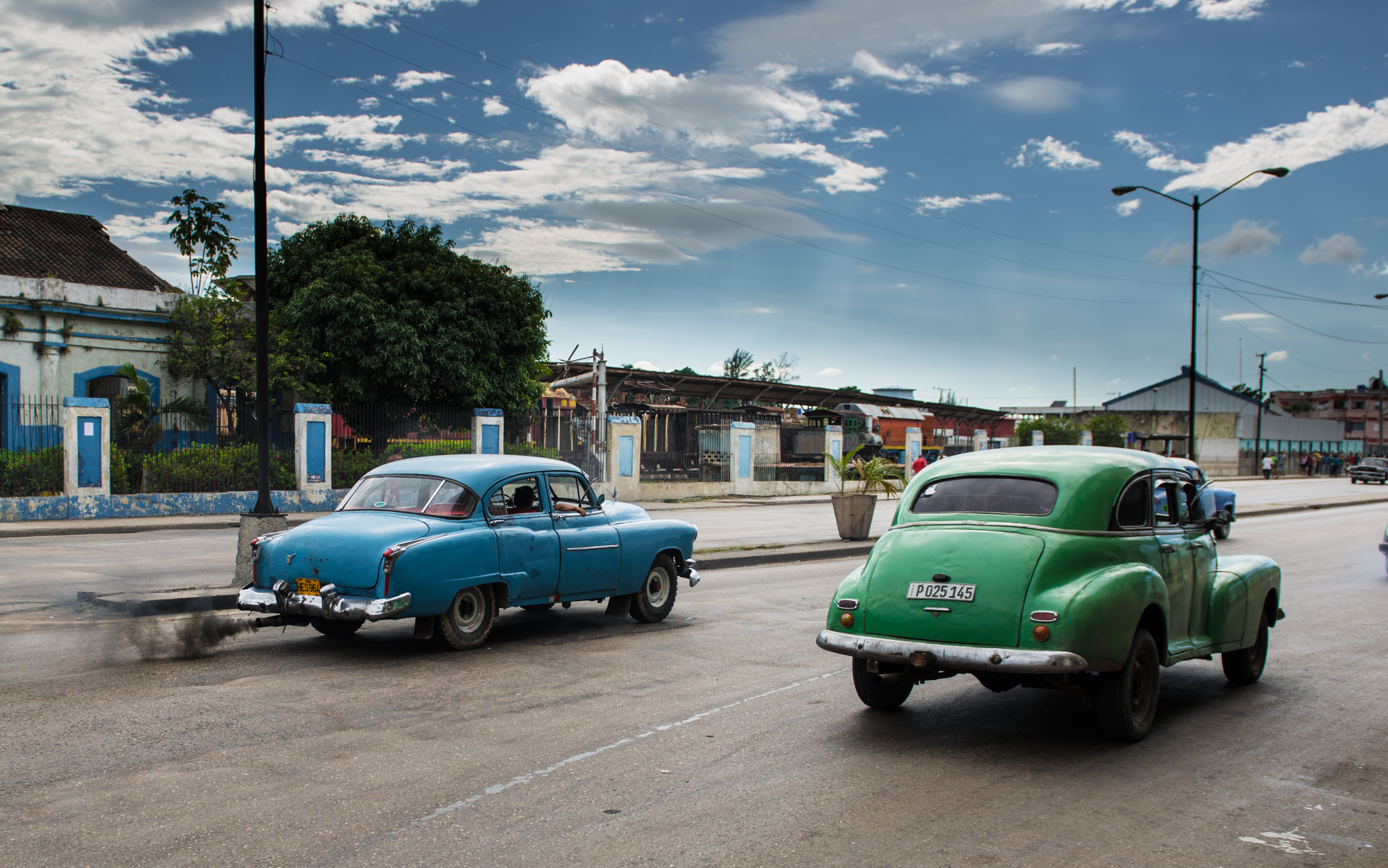
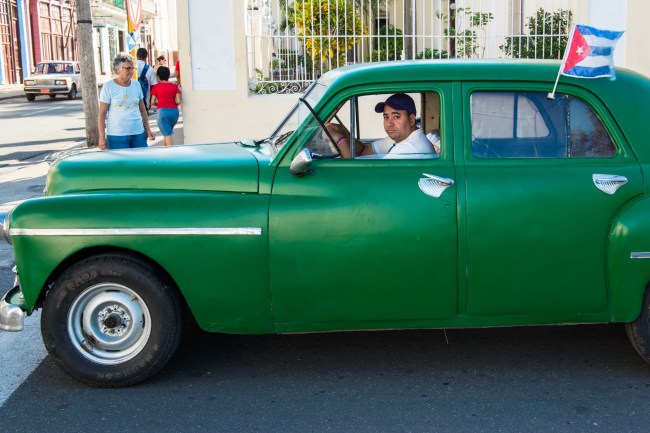 The car is a status symbol in Cuba and it’s no wonder. There are very few newer cars. Cars change hands at great expense and an incredible amount of effort goes into their upkeep. What they cannot seem to get right, though, is the emissions. Many of these classic cars run poorly and emit horrendous fumes and smoke.
 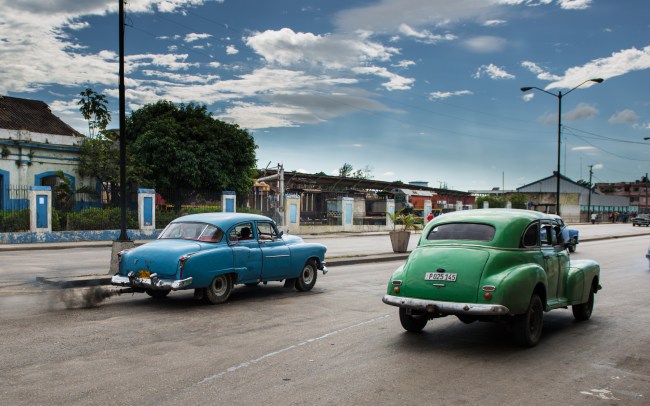 All gas is leaded and the words ‘catalytic converter’ don’t exist here. In fact, within the first couple of days you can’t help but notice your eyes bothering you and the smell of exhaust that only seems to go away when you’re in your hotel room. But if the cars are one of the first thing you think of when you think Cuba, what must the other be?
After the Cohiba, we spent a couple days outside Havana in the beautiful province of Cien Fuegos. 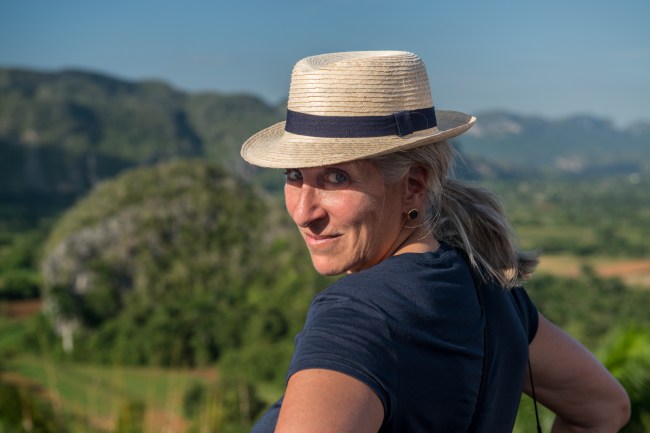 The air is clean, the buildings are in terrific shape and you can see what a beautiful country Cuba is and the future that Havana has in store. While there, we met with the head of UNEAC, Cuba’s National Union of Writers and Artists, who explained to us that artists are not censored and are encouraged to express themselves freely. Cuban art and music is amazing considering how little that they have to work with. Supplies are outdated or broken, and in either case, hard to come by. The free expression is both unusual for a socialist country and encourages the artists to express themselves fully, which they do.
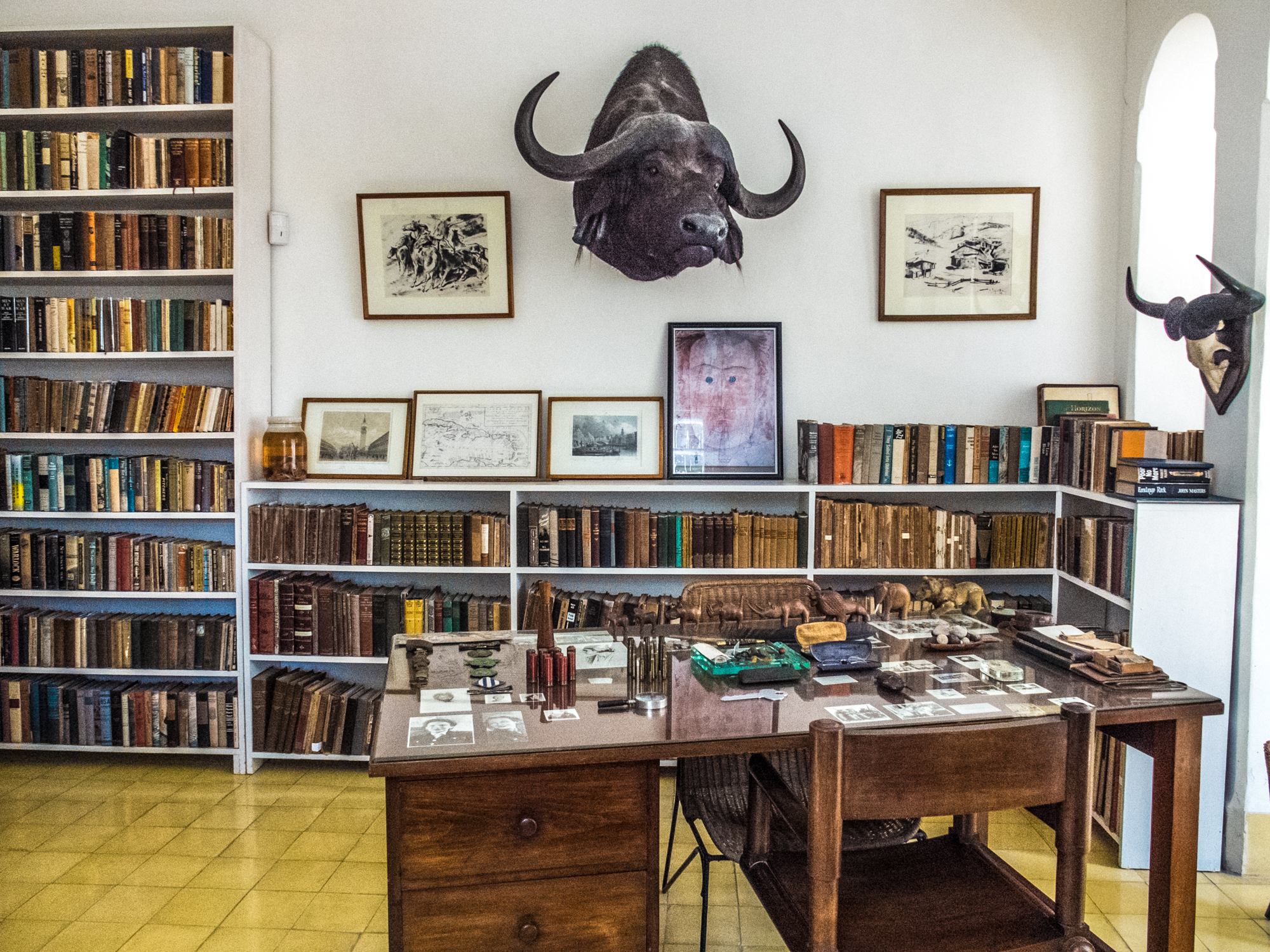
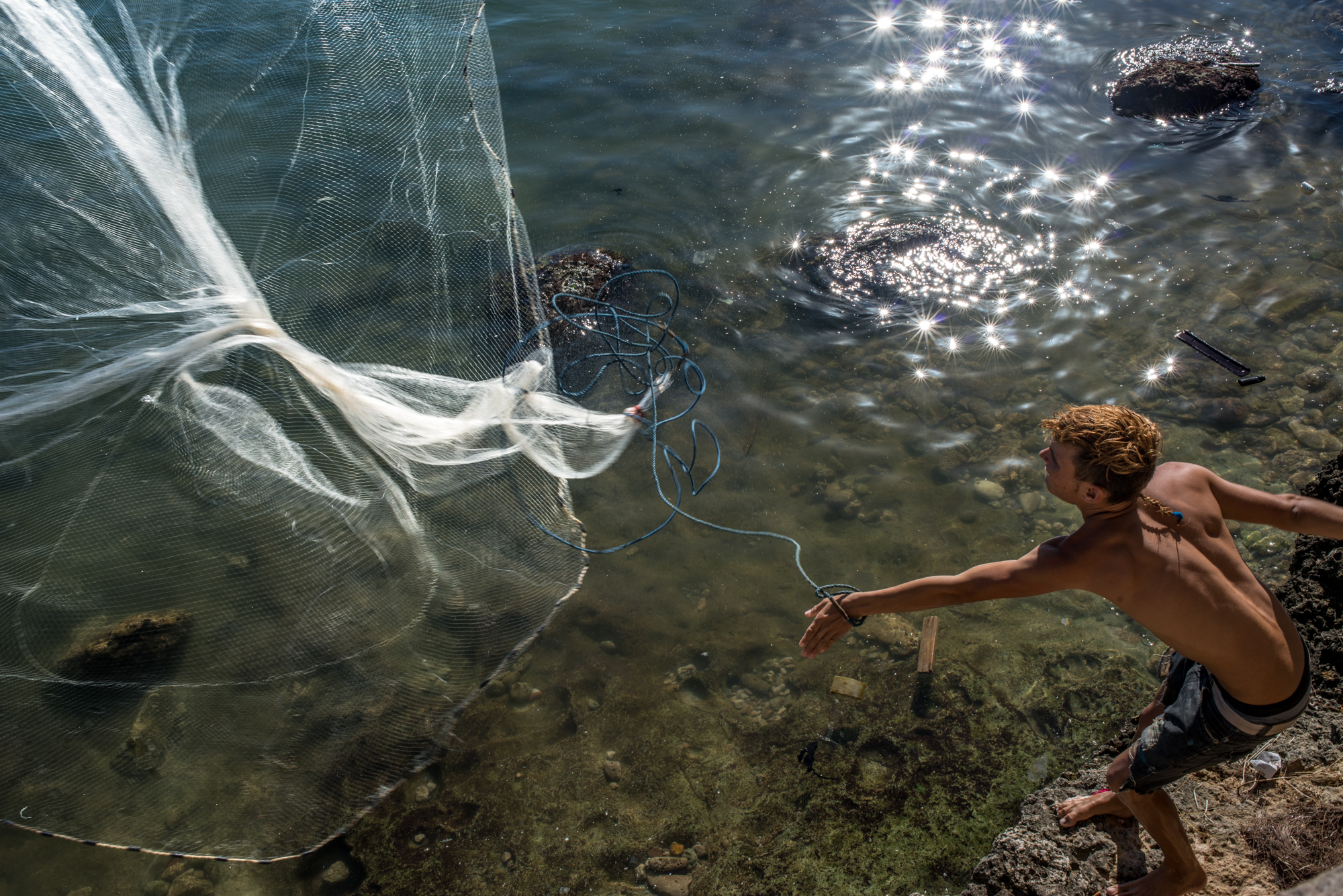
On the way we did a brief stop at Ernest Hemingway’s Cuban home.  Near a fishing village where he kept his boat, it was worth a stop, if only to see fishing the old fashioned way.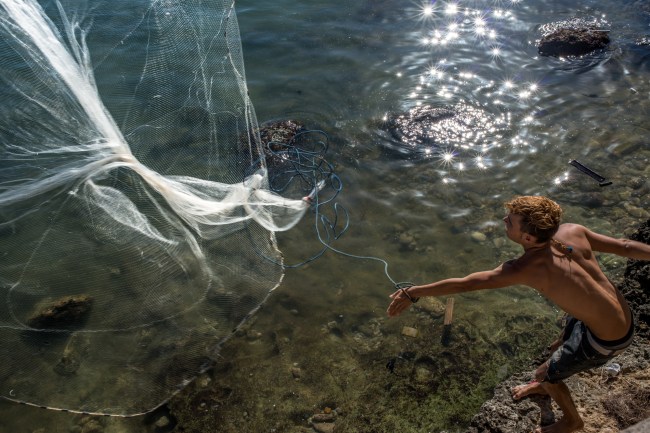
Also in the province is the beautiful old town of Trinidad, which is in the process of being lovingly restored in time for it’s 500th anniversary next year. When Columbus sailed the ocean blue, he also spent time in Cuba in fourteen hundred and ninety two. If you do the arithmetic, you find that Trinidad was founded in 1513. The homes and building are picturesque, spacious and welcoming. The cobblestone streets are a bit rough on the ankles, but strolling this village is well worth the effort.
We were incredibly fortunate to attend three private concerts and meet personally with famous award winning national musicians. One of the musicians was a 25 year old guitarist who is trying to get into the UNEAC association. We also saw and met with Frank Delgado, one of the country’s pre-eminent singer/songwriters. He played in the Trova style, one of the roots of Cuban music and really wonderful to listen to.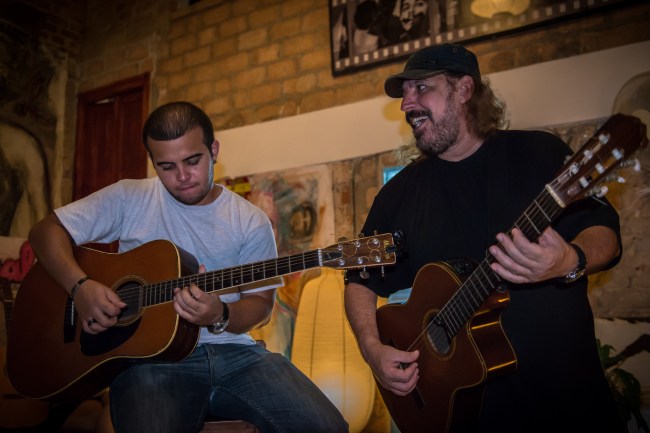
 But that wasn’t our only exposure to music in Cuba! We were also invited out with our 28 year old guide and his friends one night to a very popular club called “The Yellow Submarine” which was like a scene from a crazy B movie. The band played something that sort of sounded like Daft Punk, into Stevie Wonder and then the Beatles. The crowed loved it. They have little exposure to any new music so music was frozen back to when the Revolution began. After being banned by the Cuban government in 1962 and later allowed, Beatles music is hugely popular. There’s even a statue of John Lennon with wire frame glasses which are regularly ‘borrowed’.
We would be remiss if we didn’t talk about the food. I hope you like chicken, rice and beans. The food varies from really good to not good at all. The paladars tend to be better than the government run restaurants, but the quality varies widely. Dishes tend to be simple and choices are typically chicken, pork or beef, and usually some type of fresh fish. Sometimes we also saw lamb on the menu. All the food is pretty good, but recipes are very basic and do not vary widely from place to place. Service is better than you might expect, and I attribute it to the warmth of the Cuban people who really do want you to love their country.
The hotels are so much better than we expected. What a pleasant surprise! But for Cubans who travel to other parts of their own country, it wasn’t until last year that they could see the inside of a hotel room. They had to stay at people’s homes. As Cuba starts to reform, Cubans are now able to travel more freely inside Cuba and getting a visa to travel outside Cuba, if you can afford it, is now a reality.
So it all begs the question: are the Cuban people happy? I’m not sure we can judge but here’s what we observed: it seems the younger Cubans are just starting to know what they’ve been missing as during the past decades few have seen any other way of life. Life is hard, there’s no question about that.  Getting places with no transportation except a crowded bus with few seats that often breaks down can take hours and possibly multiple rides.
 Infrastructure is poor. Our guide, for example, has a two hour bus ride each way to work as a University professor of economics and earns only $20 per month. That’s not a typo. The fact that he moonlights as a guide to earn tips is very telling. Internet service soooo slow, and that’s when you can get it. On the other hand, the Government pays for all healthcare (which is quite good), food via ration books, all education including graduate school, transportation and work salaries, daycare and after school activities for kids.
 The only way to really get ahead is to get money from wealthy relatives that live in the US. Working harder just doesn’t do it.
  To have a home, you must inherit it. If you don’t like your home you may trade with someone for another. There’s no buying or selling of property. And yet, not unlike other third world countries we have visited, people smile, they are happy to see you and they seem to take all the hardships in stride.
 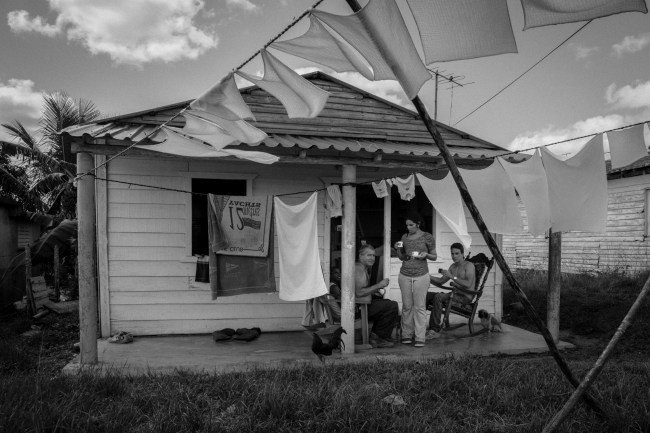 So are they content? They have deep family connections, friendships and their basic needs are met. So who’s to say?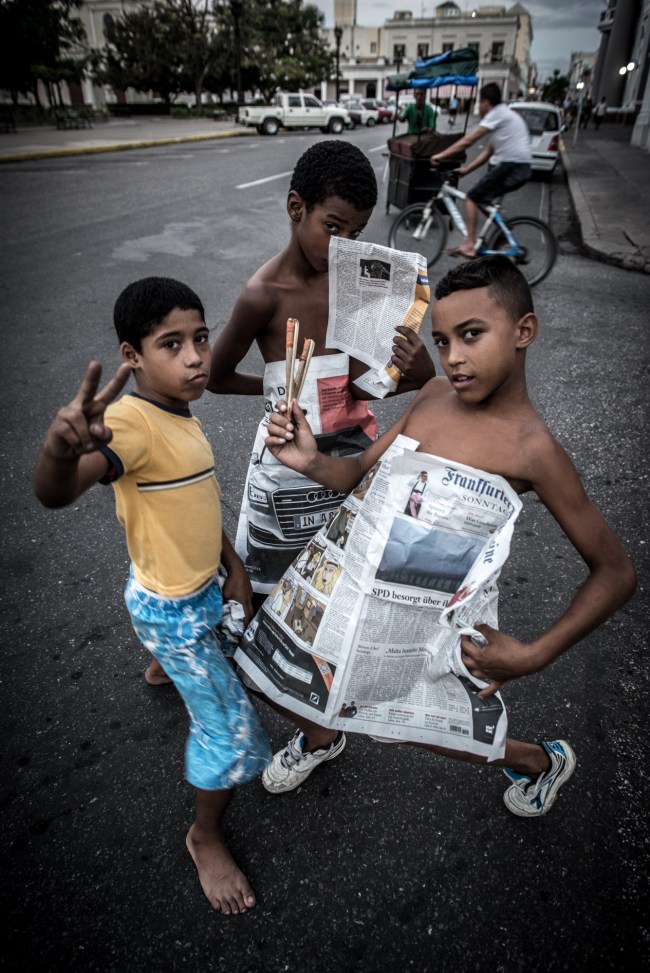
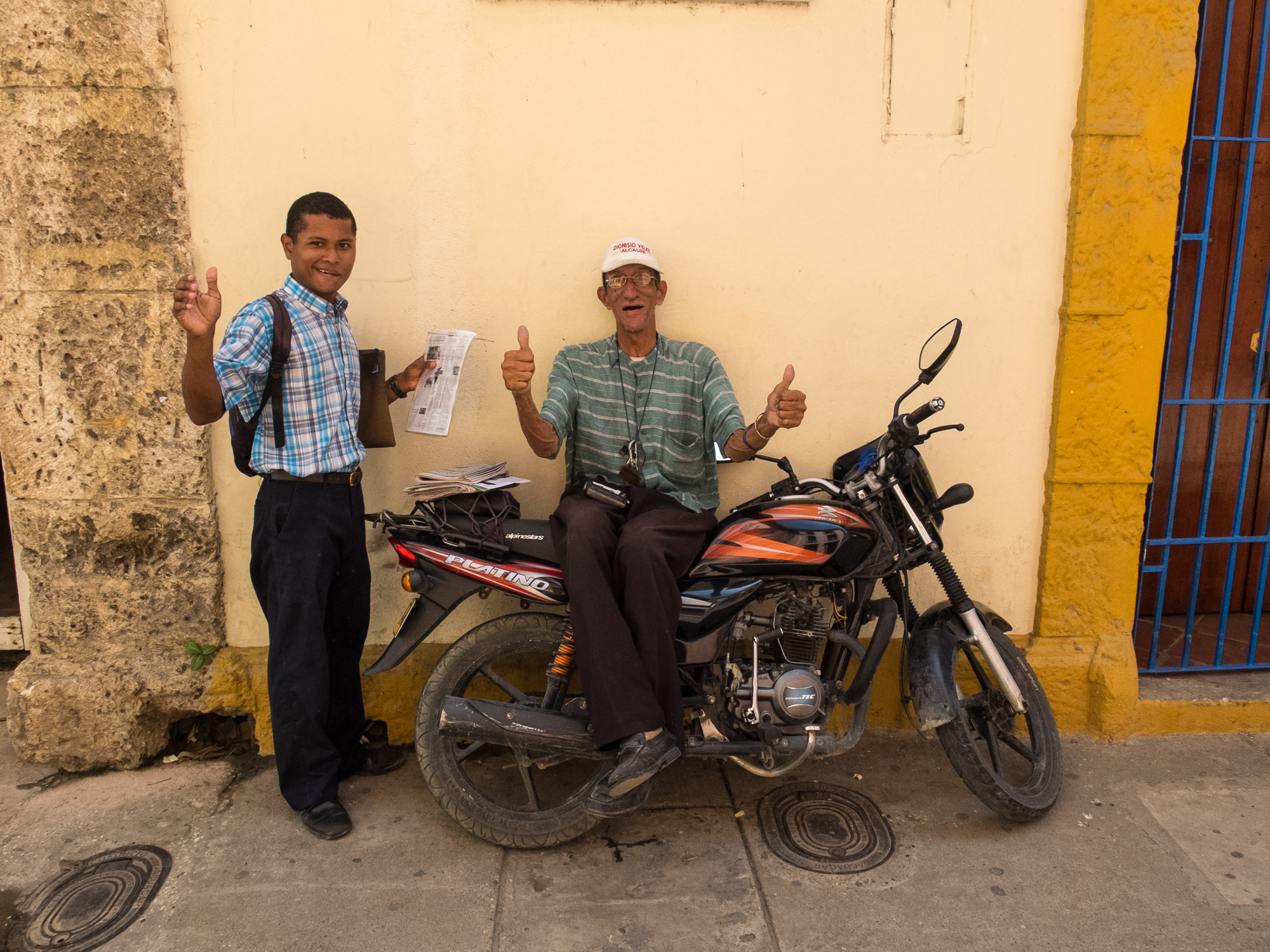
Despite the embargo from the US and our friends, they love Americans. They cheer when they meet us. We get a “thumbs-up” constantly.  They only want us to embrace them and forgive past misgivings. They are kind, innocent and desperate for us to adopt them.
Our last night in Cuba found us at the most famous paladar in Havana. It was in the third floor of a building that you’d swear would be condemned in the states. But once inside, the decor was charming and the food excellent. We were joined by our guide and his 22 year old girlfriend. We were amazed to hear what life is like for Cubans our kids’ age. At age 18 they must join the army for between 1-3 years, then attend college and if they chose to they can get a graduate degree after which they all must do between one to three years of service for the government based on their specialty learned in school and then they can begin their career. They will continue to live in their family’s home unless they get married and then may move to their spouse’s home.
There is no economic advantage to marriage and it doesn’t seem to have the same attraction as it does in the US. The government used to pay for weddings but no longer does. So as these kids and their friends opt out of getting married, it presents a future problem for this society that sees families take care of aging parents, something the government oddly does not do. What will happen to an aging generation with fewer couples and families following them? It’s just another of the problems as Cuba faces it’s future.
Finally we must also lament the fact that our guide’s girlfriend is a biochemistry researcher working on genomics based cancer treatments. She works with a team that has found a vaccine for lung cancer and due to the embargo, can not sell or give the vaccine to the US or our allies. It makes little sense.
We both hope that the US-Cuba relationship will normalize. Until that happens though, it is a place you should surely visit. It may not be a top 10 vacation, but it will be an experience that you will not soon forget.
































 gone'splorin